
Down-the-line
Early extension.
Early extension is the pelvis moving toward the ball during the swing. Learn to recognize a loss of space without trying to freeze your body in its address position.
By Dwain Kinghorn · Updated
Down-the-line · Address, Impact, Follow-Through
Understanding the idea.
The arms and club need room to travel through the hitting area. When the pelvis moves toward the ball early in the downswing, that room can shrink. The golfer may respond by raising the handle, changing posture, or redirecting the club. The result depends on how those adjustments affect the strike and clubface; a particular miss is not proof of early extension.
A down-the-line recording is useful because it shows movement toward the target line. Compare Address with the downswing and Impact, following the back of the pelvis rather than just the head. A reference line at the back of the pelvis can make the change easier to see. Keep the camera fixed and look at several swings before drawing a conclusion.
This is a pattern to investigate when it accompanies unreliable contact or a crowded delivery. Its cause might involve setup, balance, movement options, or a compensation for the club's approach. Naming the pattern does not establish which of those applies.
How to read this pattern.
Normal rotation changes which side of the pelvis is farthest from the ball. The trail side moves back during the backswing, and the lead side moves back as the swing turns through. That exchange is different from pushing the entire pelvis toward the ball.
The body also extends as part of a powerful swing. The goal is usable room for the club, not keeping every joint bent until after impact. A higher head or an upright finish alone does not diagnose early extension. Avoid turning an address reference line into an instruction to sit back or stay low throughout the swing.
See the movement in Posture Check.
These MotionEdge Mac captures compare each swing's Address and Impact frames. Read the yellow hip marker and arrow for movement toward the ball; read the cyan line for the change in spine tilt. They describe different parts of the motion.
When the hips move toward the ball
Start at the hip marker, then follow the yellow arrow on the right. The hip center has moved toward the ball as the torso becomes more upright. Notice how the cyan spine line moves closer to vertical at Impact. Together, the overlays make the change in posture easier to see.
Swipe across the image to compare Address and Impact.
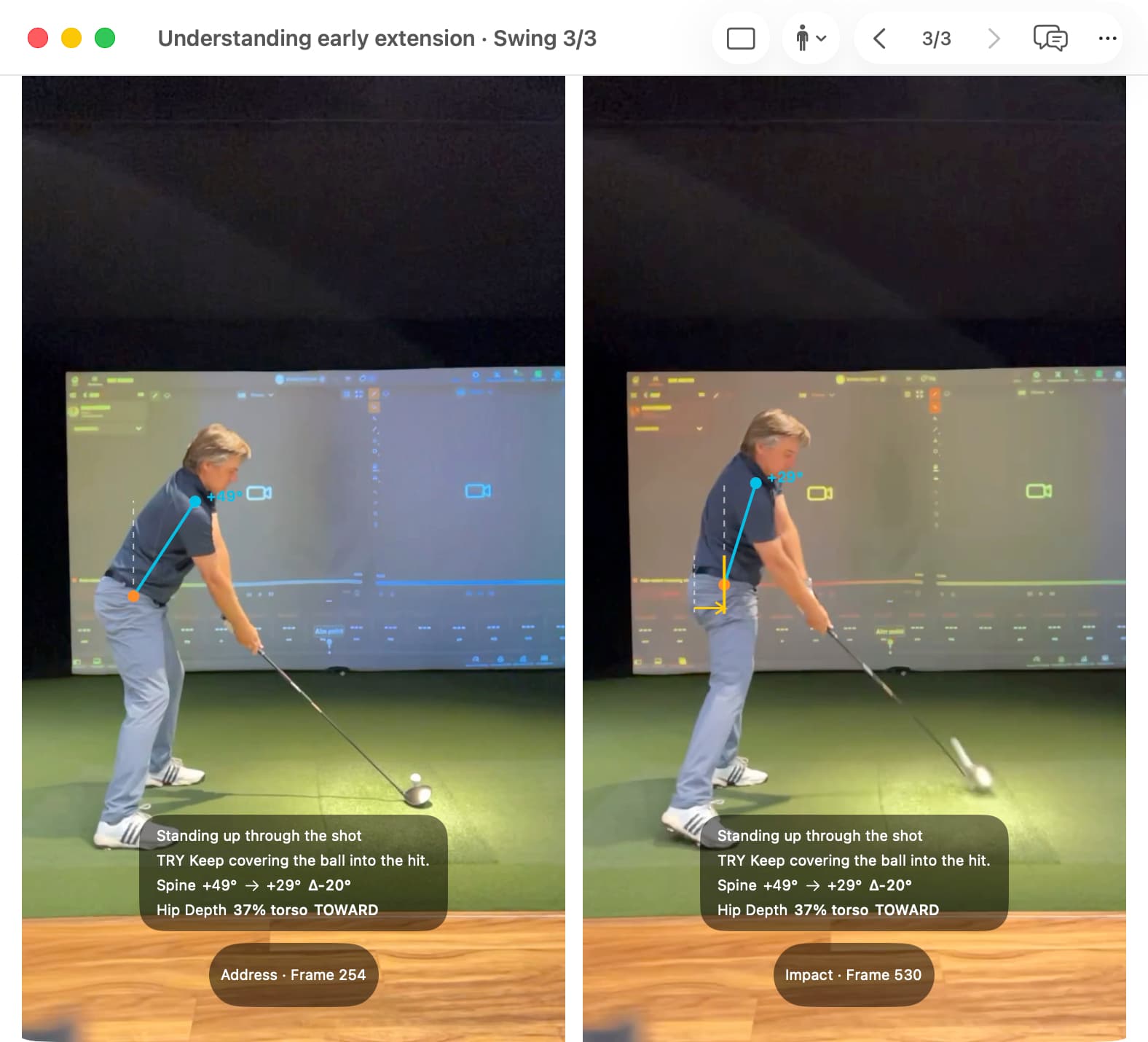
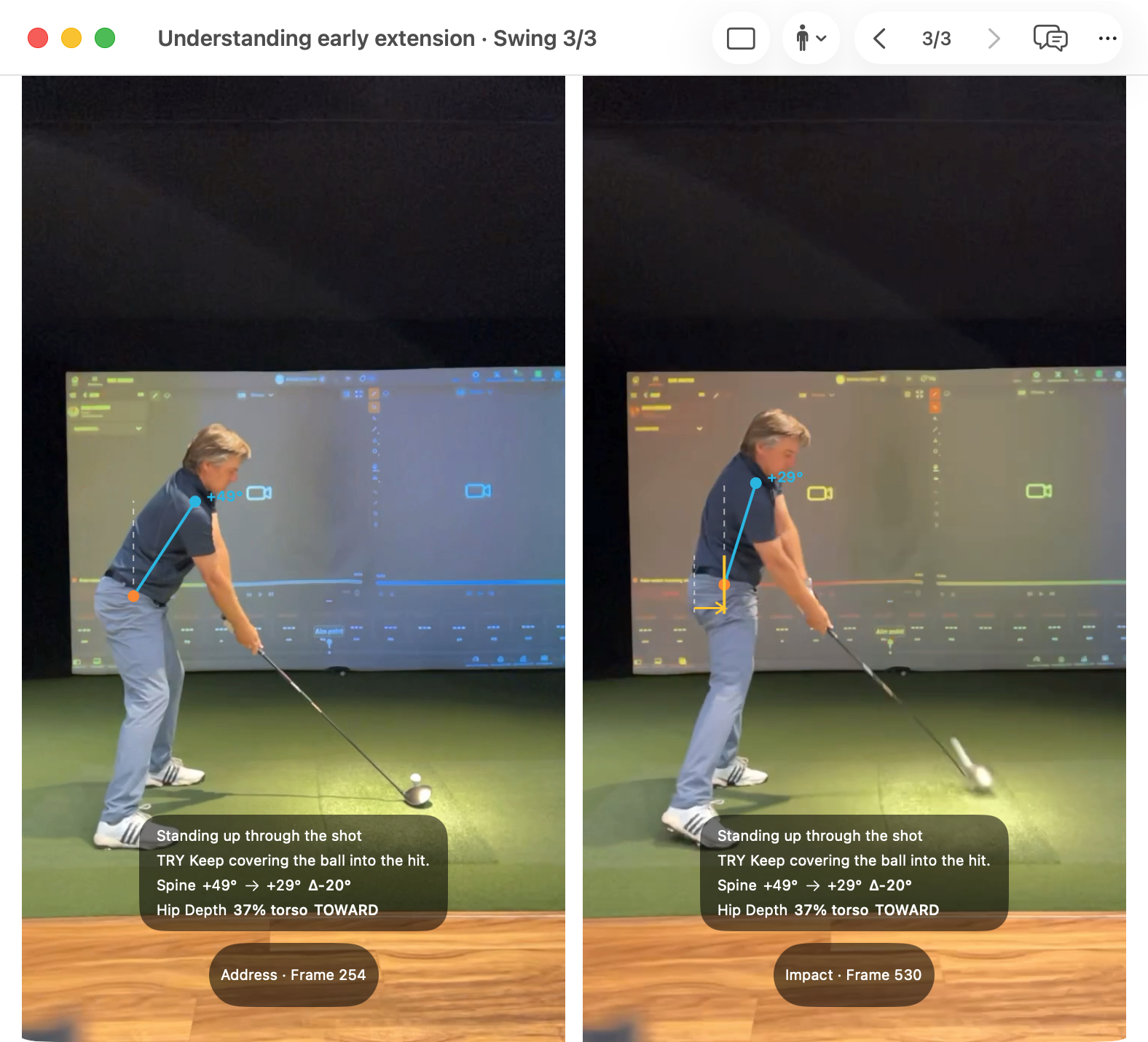
When hip depth is largely maintained
The yellow horizontal movement is barely visible in this example. The cyan spine line remains tilted forward at Impact. The golfer still rotates and changes shape: maintaining depth does not mean freezing the pelvis or reproducing the address pose at impact.
Swipe across the image to compare Address and Impact.
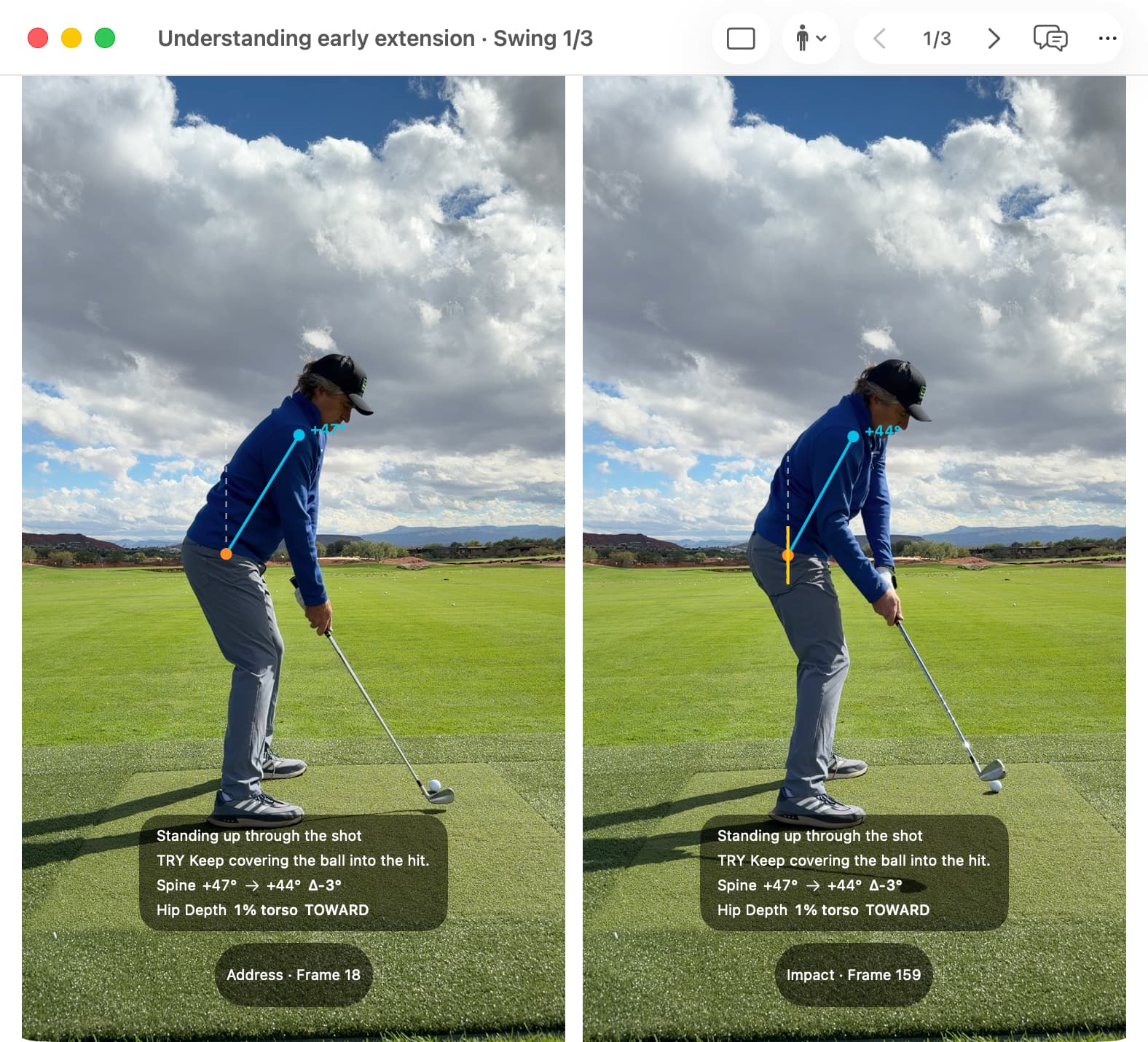
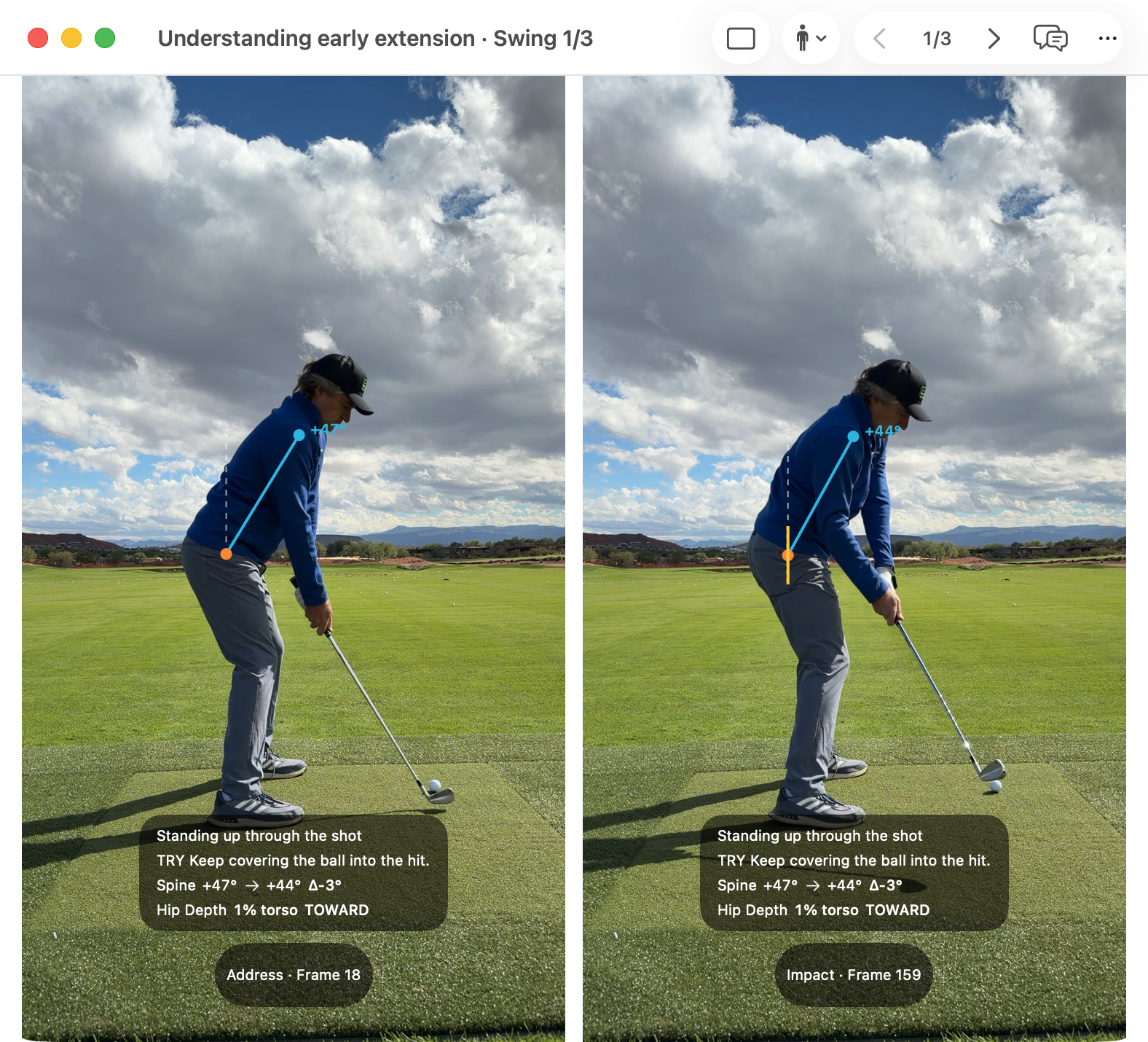
Notice that the second capture still says “Standing up through the shot.” That finding refers to the separate spine-tilt assessment. For this hip-depth comparison, follow the hip marker and its movement. One headline does not describe the whole swing.
These are different golfers and shots, not a before-and-after lesson. Compare the movement within each pair. MotionEdge measures hip movement and spine tilt so you can compare your own swings over time. Keep the camera position and shot similar, and look for a repeatable change in the pattern as you practice.
Try this view with your own swing
- Open Posture Check.Open a down-the-line swing in MotionEdge's review window, then choose Posture Check from the panel's content menu. Use a fixed camera with the golfer and club in view.
- Check the selected frames.Address should show the settled setup; Impact should be at contact. If a selection is off, use Filmstrip's frame adjustment before interpreting the comparison.
- Follow the hip marker, then replay. Compare the yellow reference and current hip position. Return to video review and watch the downswing to see when the movement happens. Judge it alongside contact and ball flight, not the still alone.
A practice cue.
Keep room for the club to swing through the ball.
Try the exercise.
Chair-reference rehearsal
Use a stable chair behind you, well outside the club's swing area. With no ball and the club held across your chest, take a comfortable mid-iron address posture so the back of your pelvis lightly touches the chair. Make a small, slow turn back and through. The contact can move from one side to the other as you turn; do not push the chair or pin yourself against it.
The chair provides feedback about the space behind you, rather than a position to force. Remove it before swinging the club normally. Make a few short rehearsals while imagining that space is still available, then introduce a ball at an easy pace. If the rehearsal creates strain or makes balance worse, reduce the motion rather than forcing contact with the chair.
Practice set: Make 2 sets of 5 slow chair rehearsals, then hit 5 easy mid-irons with the chair removed.
Keep in mind: Picture an open passage for the club through the strike.
Review the result.
For a practice comparison, record 5 full mid-iron swings from a down-the-line view. Use the same setup for both sets; label shorter drill swings separately.
Compare a few down-the-line swings using the same camera position, club, and intended shot. Look for less crowding during delivery while the turn and finish remain free. Judge contact as well as appearance: a neater outline that produces worse strikes is not the whole answer.
Record ordinary attempts, including misses. If discussing the results with AI Coach, explain what you tried and which swings are before and after. The page supplies a practice idea; the conversation supplies the reason to use it.
Watch these clips.
These demonstrations offer another way to understand the idea. Each video opens at the selected starting point and continues playing; use the note below it to focus your viewing.
The reference behind the pelvis makes movement toward the ball easier to see. Watch the change through the turn, rather than treating the address outline as a position to freeze.
Watch how hip movement can preserve room for the club. The useful distinction is rotation with space versus crowding the delivery, not keeping the whole body still.