
Coach’s Corner
Understand your swing.
Make practice count.
Golf guides that connect what you see to what you can try. Explore annotated swings, practical exercises, and ways to judge your progress.
Free to read. No MotionEdge account needed.
New to reviewing your swing?
Start here. Work through one idea at a time, then use the topic library when a specific question comes up.
Step 1
Build a comfortable setup →Find room for the club and a starting position you can repeat.
Step 2
Place the ball with purpose →Read its position against your stance and the shot you intend.
Step 3
Follow the swing →Start with Top, then explore the ten positions from Address to Finish.
See the idea in a swing.
Follow the references in these illustrated guides, then try the same view with your own recording.
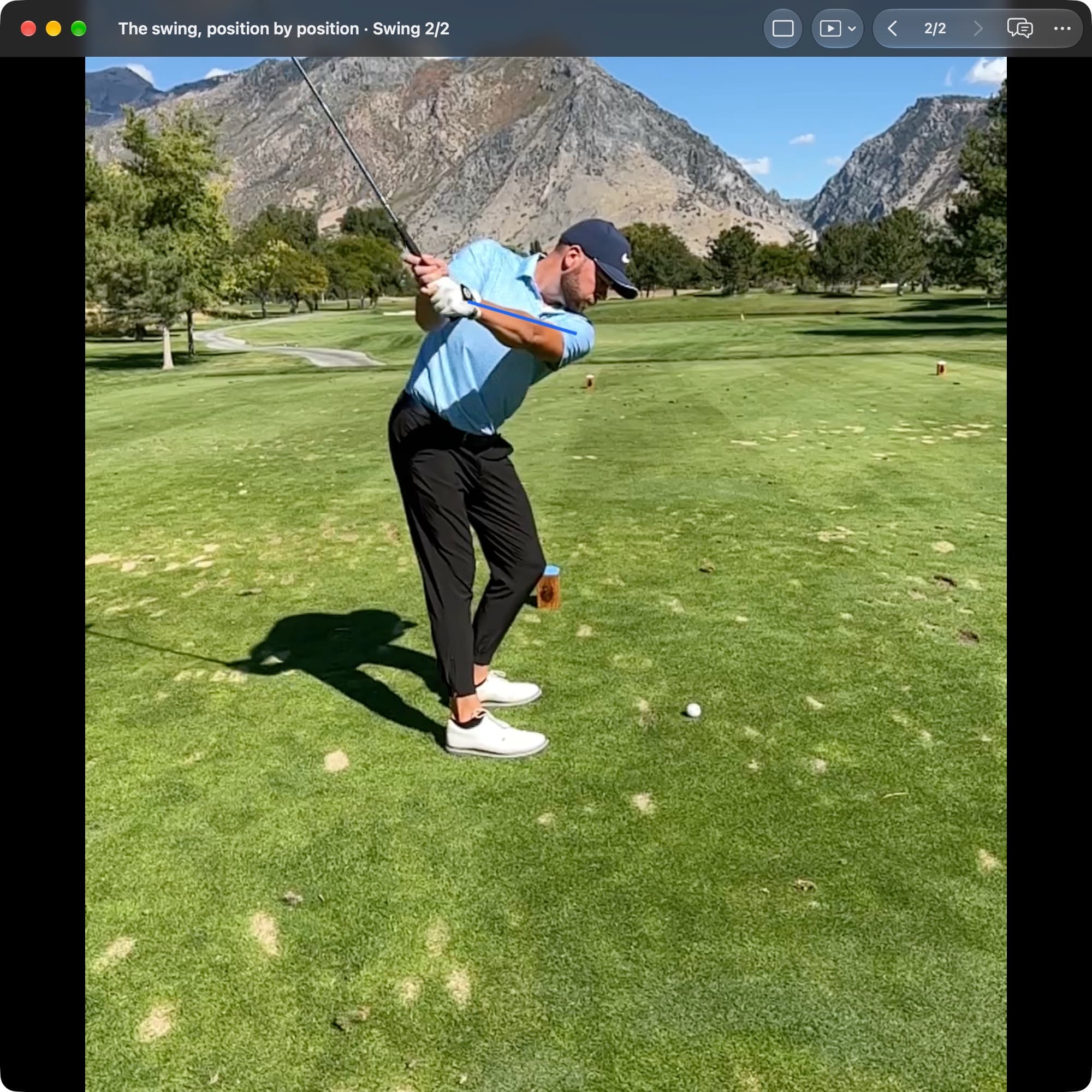
Flat backswing →
A flat backswing carries the arms or shaft on a relatively low plane. Learn when that shape affects delivery and why low, inside, and laid off are not interchangeable labels.
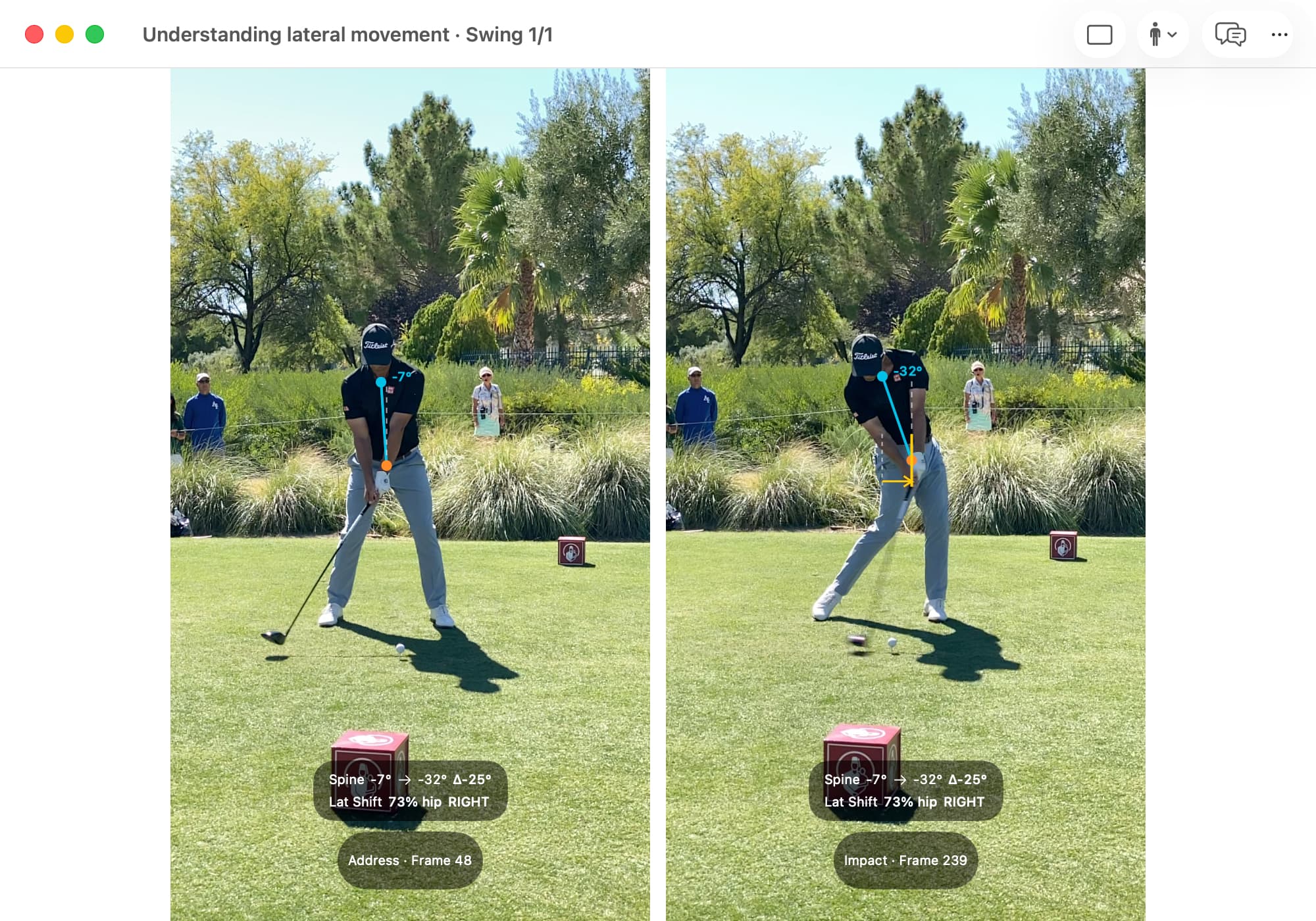
Hanging back →
Hanging back describes a delivery that stays too far toward the trail side for the intended shot. Separate that pattern from normal upper-body tilt, especially with a driver.
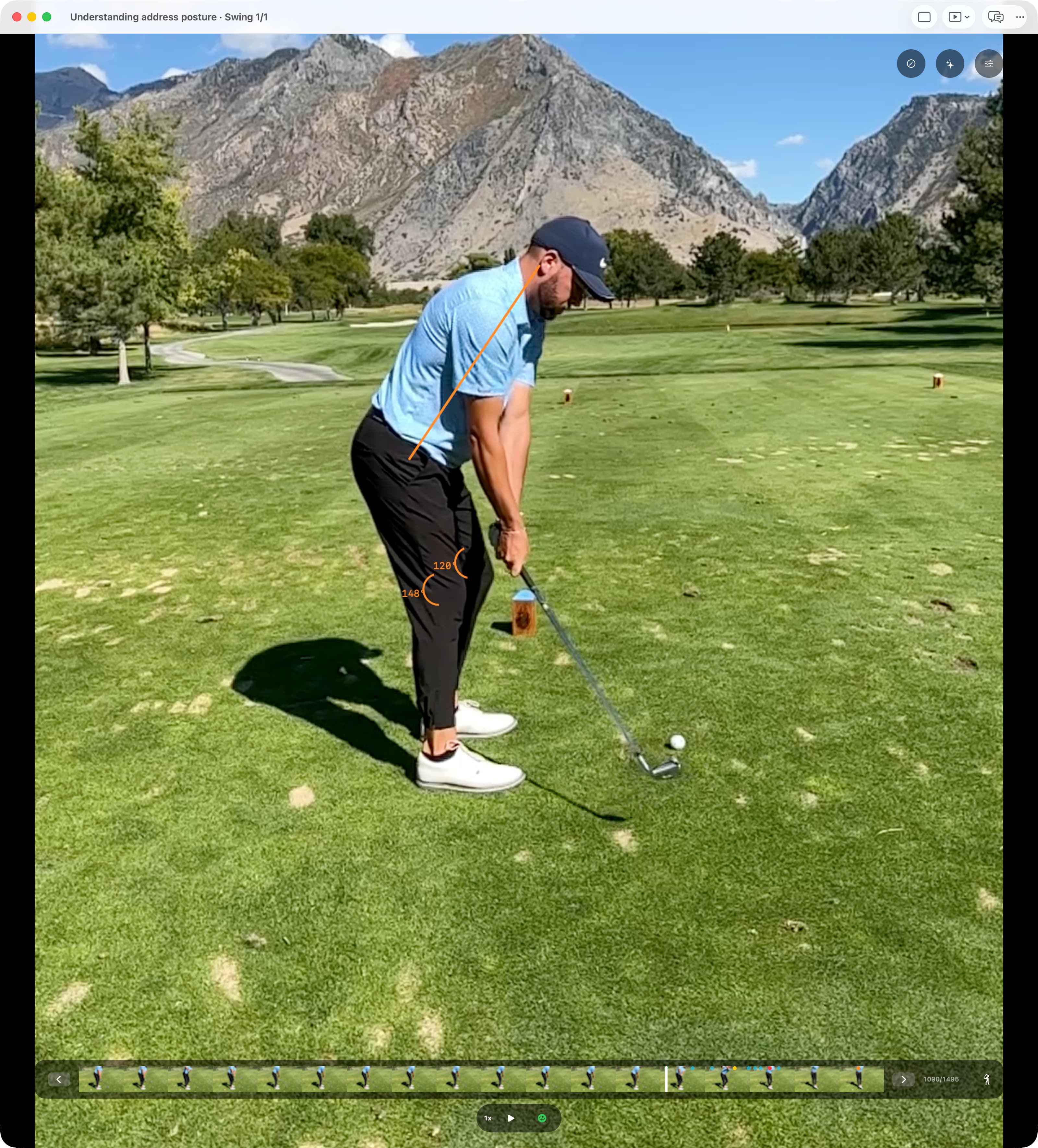
Address posture →
Address posture gives the club room to swing and the golfer a balanced starting point. Aim for a comfortable setup, not a rigid back shape or a pose copied from another player.
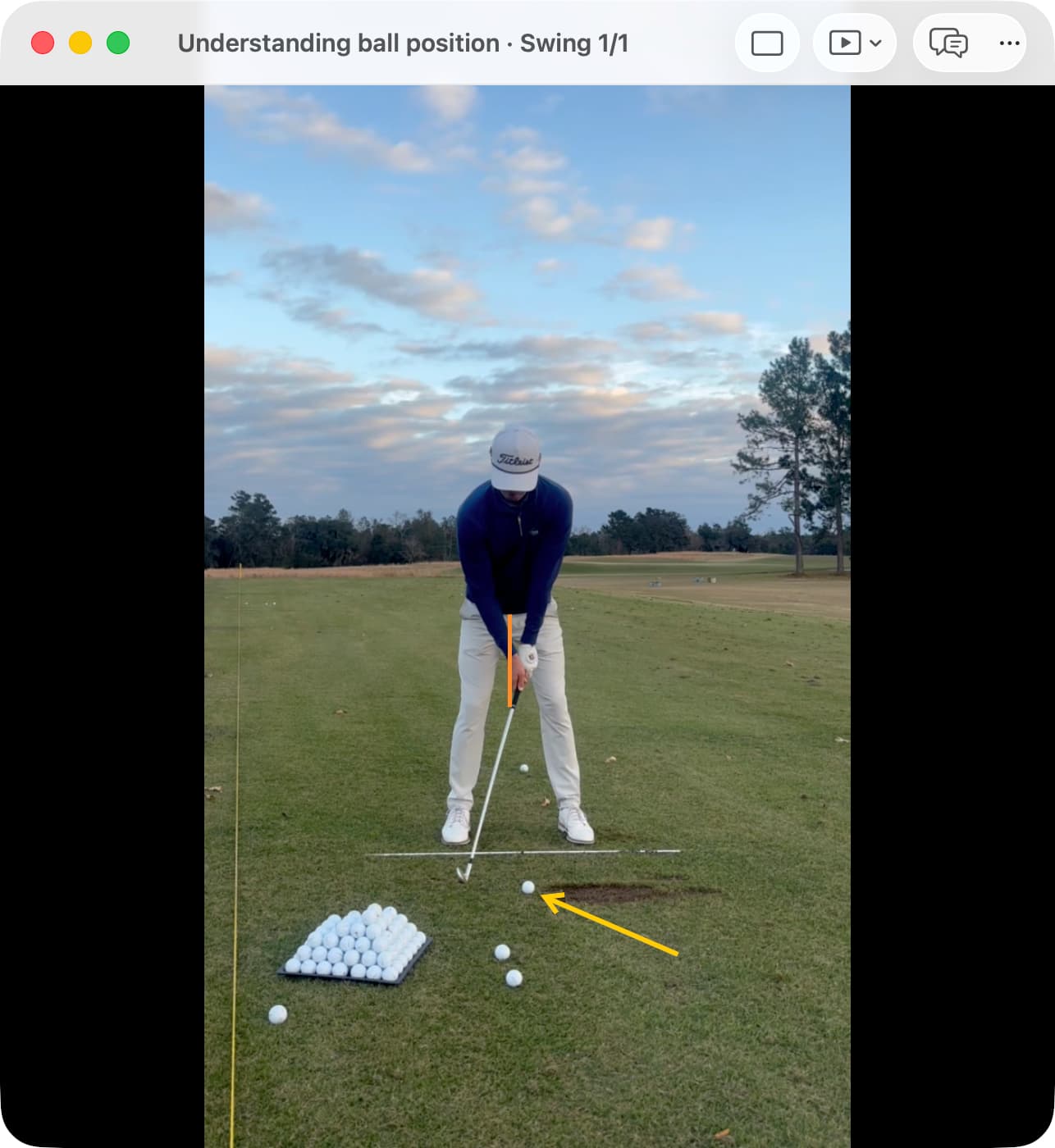
Ball position →
Ball position changes where the club meets the ball along its arc. Find a repeatable starting point for the chosen club, then evaluate it through contact and flight.
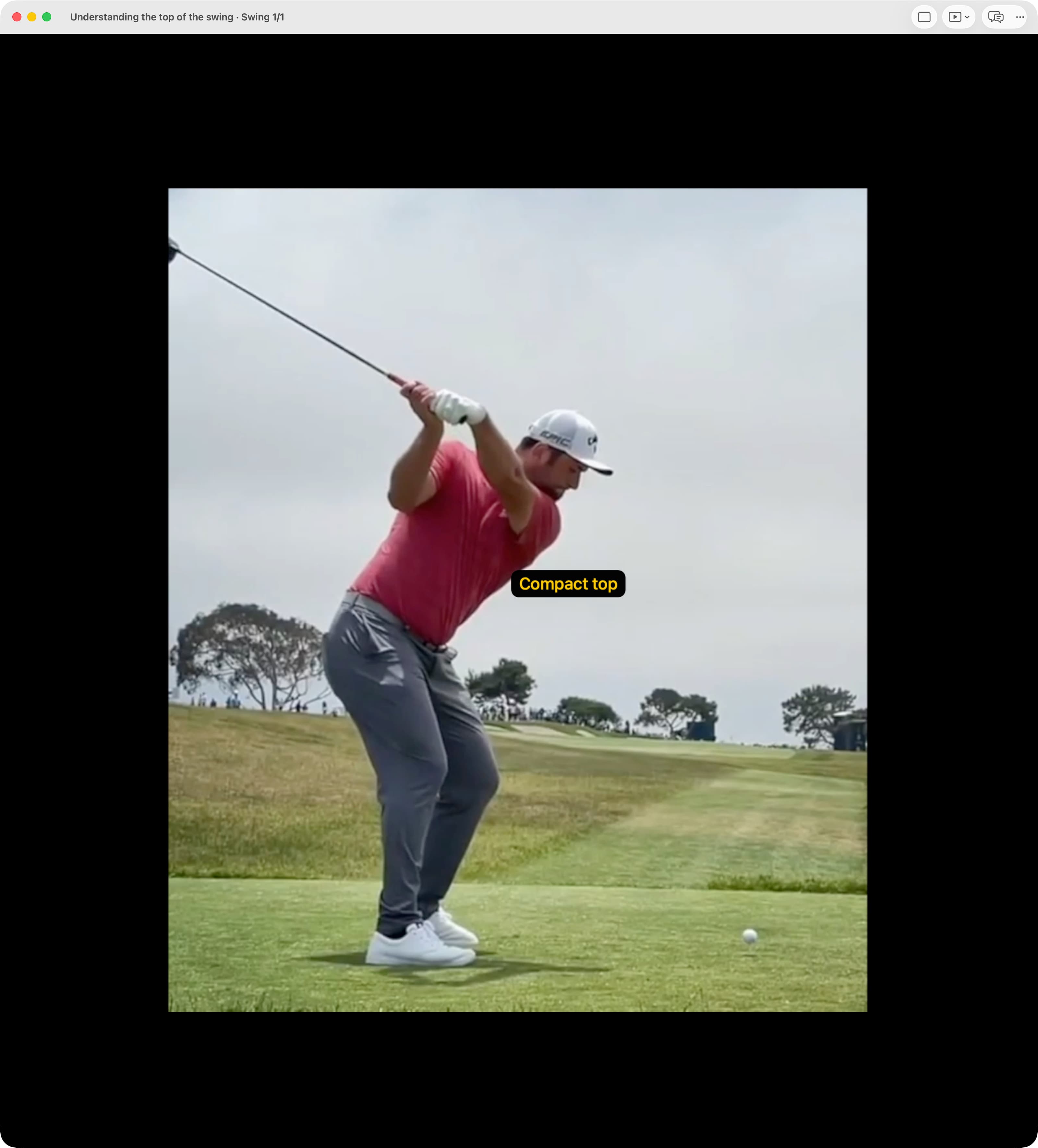
Top →
Top is the changeover near the end of the backswing. It is a reference for the transition, not a pose that every part of the body reaches at the same instant.
Find your next guide.
38 guides
Setup
Alignment connects the chosen target, clubface aim, and body setup. Make those references deliberate so a good swing is not judged against a target it was never aimed at.
Ball positionBall position changes where the club meets the ball along its arc. Find a repeatable starting point for the chosen club, then evaluate it through contact and flight.
GripThe grip connects the hands to the club and influences face control. Build a secure, comfortable hold, then judge it by the delivery it produces rather than one prescribed hand picture.
Address postureAddress posture gives the club room to swing and the golfer a balanced starting point. Aim for a comfortable setup, not a rigid back shape or a pose copied from another player.
Backswing
Sway is excessive sideways movement away from the target during the backswing. The useful distinction is between a manageable shift and a drift that makes returning to the ball difficult.
Reverse spineReverse spine angle describes an upper body that leans toward the target near the top. Learn to identify the pattern without forcing a rigid spine or an exaggerated tilt away.
Flying elbowA flying trail elbow is a description of the arm at the top, not a diagnosis by itself. Explore whether the arm-and-club position supports an easy return to the ball.
Cupping at the topA cupped lead wrist is bent back toward the forearm. Its meaning depends on the grip and clubface, so a cup at the top is not automatically something to remove.
Flat backswingA flat backswing carries the arms or shaft on a relatively low plane. Learn when that shape affects delivery and why low, inside, and laid off are not interchangeable labels.
Delivery
Early loss of lag describes the club releasing its angle early in the downswing. Explore the timing of the release without trying to hold the wrists rigid.
Early extensionEarly extension is the pelvis moving toward the ball during the swing. Learn to recognize a loss of space without trying to freeze your body in its address position.
Over the topAn over-the-top transition sends the club outward as the downswing begins. Learn when that movement affects the strike and how to practice a less crowded approach.
Stuck insideA club that approaches too far from inside can feel trapped behind the body. Explore the delivery without treating every inside path as something to fix.
Hanging backHanging back describes a delivery that stays too far toward the trail side for the intended shot. Separate that pattern from normal upper-body tilt, especially with a driver.
Early hip slideA slide is excessive movement toward the target during the downswing. Learn to distinguish it from the normal shift that supports rotation and a solid iron strike.
Rush from the topA rushed transition is an abrupt change of direction that disrupts delivery. Explore a smoother handoff from backswing to downswing without assuming a slow swing is always better.
Open faceAn open clubface must be understood relative to a target or a swing path. Learn the difference, then practice a more predictable starting direction without forcing a last-second roll.
Loss of postureLoss of posture is a change in body orientation that interferes with delivery. Learn to review it without treating normal extension or head movement as a fault.
DecelerationDeceleration is worth investigating when an attempted full shot turns into a stop at the ball. A short finish alone, however, does not prove the club slowed before impact.
Closed faceA closed clubface can refer to the target line or the club’s path. Understanding that distinction makes pulls and hooks easier to investigate without trying to hold the face open.
ScoopScooping describes adding loft by letting the clubhead overtake the handle too early for the intended strike. The aim is a clean iron contact, not dragging the handle forward.
Arm-dominantAn arm-dominant swing relies heavily on the arms while the rest of the motion contributes little. Explore coordination without trying to take the arms out of the swing.
Chicken wingA chicken-wing follow-through describes a lead arm folding away from the body soon after impact. Learn when that picture matters and when arm folding is simply part of the finish.
No shaft leanShaft lean describes the handle’s position relative to the clubhead at impact. For a stock iron, it is useful to understand through contact and loft rather than by chasing a dramatic angle.
Hitting down with the driverAttack angle describes whether the driver is moving up or down at impact. Explore a more suitable teed-ball delivery without assuming that every downward strike is a failure.
Swing positions
Address is the starting setup before the club moves. Use it to establish the intended shot and camera references, not to prescribe one body shape for every golfer.
TakeawayTakeaway is the opening movement away from the ball. Read the club’s route in relation to the turn, without expecting it to travel straight back indefinitely.
BackswingBackswing shows the club rising as the turn develops. Use it to understand the route to the top, rather than to demand one fixed arm height or shaft plane.
TopTop is the changeover near the end of the backswing. It is a reference for the transition, not a pose that every part of the body reaches at the same instant.
TransitionTransition is the change from backswing to downswing. Read its rhythm and direction across several frames; one still cannot show which segment accelerated first.
DownswingDownswing shows the club approaching the hitting area after transition. Read the route and available space together rather than treating one shaft line as the ideal delivery.
Pre-ImpactPre-Impact is the last part of the approach before contact. Use it to connect the downswing with the strike, while recognizing that a nearby frame may not capture impact itself.
ImpactImpact is the brief collision between club and ball. Use the image with the shot result, and do not assume a selected frame resolves every detail of the delivery.
Follow-ThroughFollow-Through shows how the club exits after the strike. It offers clues about the motion, but an after-impact pose cannot by itself explain what caused the ball’s flight.
FinishFinish is the end of the swing as the motion settles. Use it to review balance and completion, without assuming a trophy pose proves a good strike.
Course decisions
A pre-shot routine turns a decision into a committed attempt. One simple cue can keep attention on the shot instead of carrying a checklist of swing mechanics to the ball.
Into the windA headwind changes both carry and the way a shot behaves in the air. Choose enough club and a manageable flight instead of trying to force the usual distance with extra effort.
Play the fat sidePlaying the fat side means choosing a target with room for ordinary misses. Use the whole landing area and the location of trouble, rather than aiming at every flag.
About these guides.
Instructional sources are identified beside their videos. Examples explain a concept; an AI Coach conversation or your instructor supplies the context for your own swing.
Each practice guide pairs one idea with an exercise and a way to review the result. Use the written instructions independently, or follow the MotionEdge steps to examine your recording.
About MotionEdge →