
Launch monitor
Low point.
If your irons come off heavy or thin, low point tells you where the club bottomed out. TrackMan shows it as a distance from the ball: positive after it, negative before it. Brush the turf after the ball and watch where the number settles.
By Dwain Kinghorn · Updated
What to look for.
- Where it comes from
- A launch monitor (TrackMan), not the video
- Where to find it
- The Swing Scorecard's TrackMan rows, on a swing with TrackMan data attached
- Low point is where the club bottoms out: positive after the ball, negative before it.
- With irons, most tour swings bottom out after the ball. With a teed driver, they often bottom out before it.
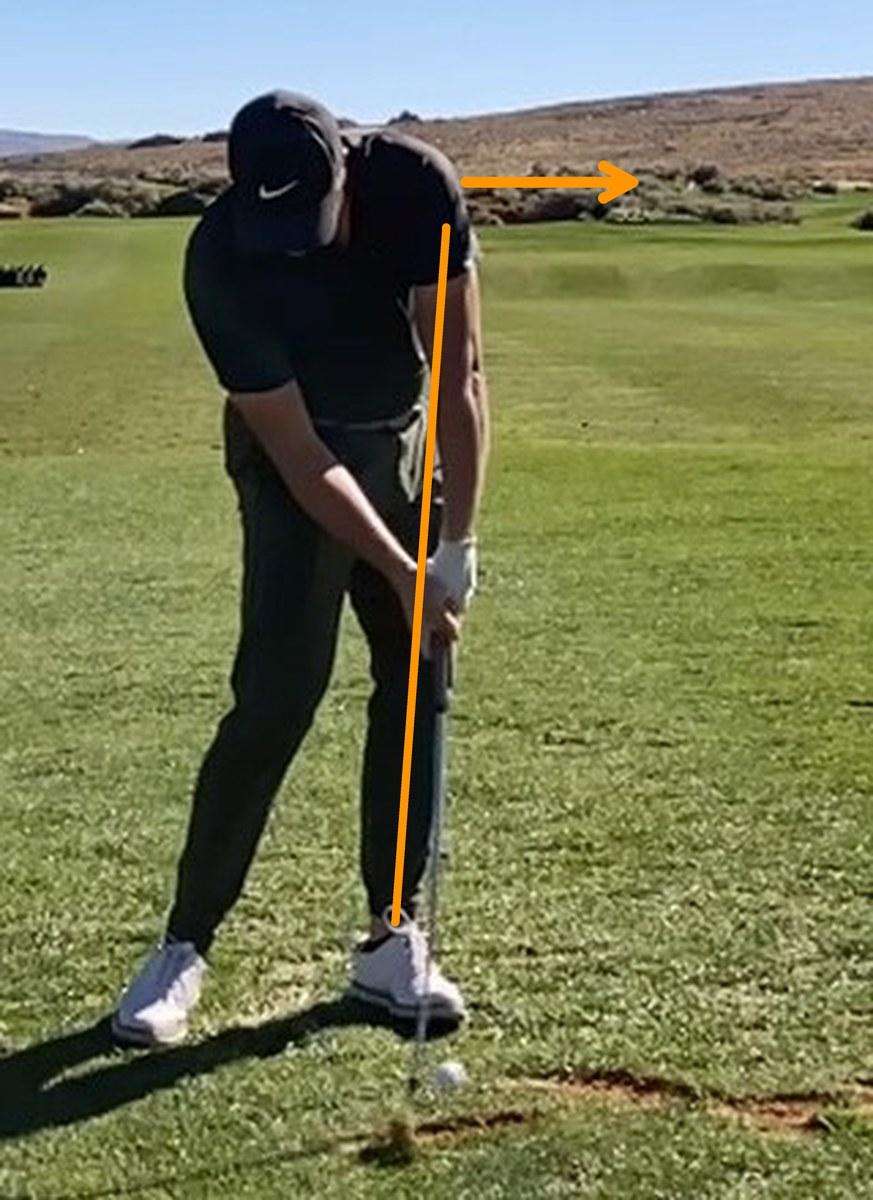
- On video, a lead side that moves less toward the target into impact tends to go with a low point farther behind the ball.
What goes with it on video
Understanding the idea.
Every swing has a lowest point, and where it falls compared with the ball has a lot to do with contact. With an iron off the ground, the club usually reaches the ball on the way down and bottoms out a little after it. That's why a divot starts after the ball. TrackMan reports that distance directly, in centimeters. It reads the same way for left- and right-handed golfers.
A teed-up driver is different. The club can bottom out before the ball and meet it on the way up, so a driver's low point is often negative.
These ranges come from TrackMan: the middle 80 percent of the tour swings MotionEdge has for that club. They show where good players land. They aren't a number to aim for. With irons, most tour swings bottom out between about 7 and 18 centimeters after the ball, with the middle around 12. With wedges, between about 7 and 16 centimeters after. With the driver, between about 15 centimeters before the ball and 5 after.
On video, one picture goes with this number. Picture the compression line, from your lead ankle up to your lead shoulder. When it moves less toward the target from the top into impact, it tends to go with a less downward strike and a low point farther behind the ball. The hanging back and fat shots guides show that picture.
How to use this idea.
The number tells you where the bottom of the swing was. It doesn't tell you why. A low point a little shorter or longer than most tour swings can still give you clean contact. Soft turf, a mat and the lie all change how the same low point feels.
A practice cue.
Brush the turf after the ball.
Try the exercise.
Low-point ladder
On a launch monitor with a mid-iron, hit five balls at your normal pace and note the low point of each. Then put a towel or a line a hand's width behind the ball and hit five more. Try to miss the towel and brush the turf after the ball.
Compare the two sets. If the low point moves after the ball and the strike holds up, keep the feeling. If the number jumps around, shorten the swing until it settles.
What to record
Compare the average of each set with the same club, and keep a change only when the number repeats and the strike holds up.
Practice set: Hit 2 sets of 5 mid-irons, noting the low point of every ball.
Keep in mind: Picture the club brushing the grass after the ball.
Review the result.
Compare the average low point of each set with the same club. You're looking for a number that sits after the ball more often and changes less from shot to shot.
Watch these clips.
These demonstrations offer another way to understand the idea. Each video opens at the selected starting point and continues playing; use the note below it to focus your viewing.
What TrackMan's low point measures and why, with irons, it usually sits after the ball.
A short explanation of low point on TrackMan, as the lowest point of the swing arc relative to the ball.