
Face-on
Fat shots.
You hit it fat when the club meets the ground before the ball, so the shot comes off short and weak. Lay a towel behind the ball and brush the turf past it without touching the towel.
By Dwain Kinghorn · Updated
Face-on · Club in frame · Top, Impact, Follow-through
What to look for.
- Camera view
- Face-on
- Where to pause
- Impact, compared with the top of the swing
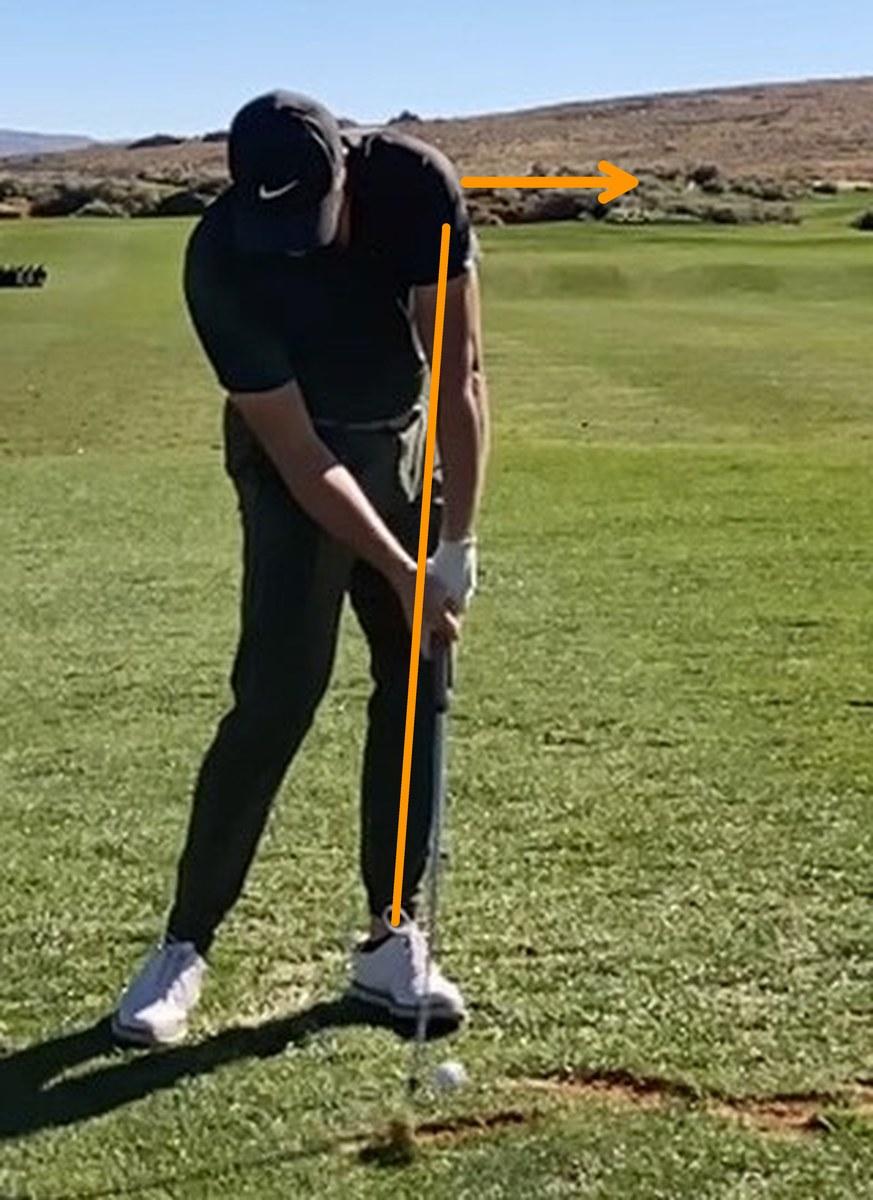
- Picture a line from your lead ankle up to your lead shoulder.
- From the top to impact, that line moves toward the target in this swing.
- A line that stays about where it was at the top tends to go with a low point farther behind the ball.
A swing that does this well
Understanding the idea.
Your swing has a low point, the spot where the club is closest to the ground. With an iron off the ground, the club normally meets the ball on the way down, a little before that low point, so any divot starts after the ball. A fat shot is the reverse. The low point comes behind the ball, the club digs or bounces into the turf first, and the ball comes off short and weak.
Several things can move the low point back. One that MotionEdge measures face-on is the line from your lead ankle up to your lead shoulder, the compression line. In swings that hit the ground after the ball, that line tends to move toward the target between the top and impact. A line that stays about where it was at the top tends to go with a low point farther behind the ball. The hanging back guide covers that pattern in detail.
Other causes are common too. The ball may be too far forward for the club, or your body may fall back away from the target. The club can also release its angle early, so the clubhead reaches the ground sooner. Any of them can give you the same miss. So the ground is a better first clue than any one frame.
Check the turf before the video. A divot that starts behind the ball tells you more than a still. On a mat, a fat strike can bounce into the ball and look fine, so use a strike board or a line on the mat.
How to read this pattern.
Taking turf isn't the problem. Where the divot starts is. Many good iron strikes take a divot that begins at the ball or just after it. A teed driver is a different job. The club should meet a teed ball on the way up, so a driver that brushes the tee behind the ball isn't a fat shot.
The lead-side line is one reference. Don't force it. If you push your whole body toward the target to make that line move, you can slide or dig in steeply. A swing that does this well moves through the ball by turning through. It doesn't shove.
Soft or wet turf makes a slightly heavy strike look worse. Judge the pattern on firm ground or a strike board before you decide the swing has changed.
A practice cue.
Brush the turf after the ball, clear of the towel.
Try the exercise.
Towel behind the ball
Take a short iron or a mid-iron to level grass. Lay a folded towel flat on the ground about a hand's width behind the ball, on the target line.
Keep it to half swings at first. Hit the ball and miss the towel. If the club touches the towel, the low point came behind the ball. Make the next swing smaller. Don't lift the club over the towel with your arms.
When five in a row miss the towel and the turf mark starts after the ball, move the towel a little closer or make a longer swing. On a mat, use a strike board or a chalk line, because a mat lets the club bounce into the ball.
What to record
After each ball, note whether the towel was touched and where the turf mark started. Count how many of each set brushed after the ball.
Practice set: Hit 3 sets of 5 half swings, checking the towel and the turf after each ball, then 5 three-quarter swings.
Keep in mind: Let the club brush the grass on the target side of the ball.
Review the result.
For a practice comparison, record 5 full mid-iron swings from a face-on view, keeping the club in frame. Use the same setup for both sets; label shorter drill swings separately.
Film face-on with the club in the shot. Pause at the top and at impact and compare where the line from the lead ankle to the lead shoulder sits in each. Put that together with the turf. The change you want is the divot or brush mark starting after the ball more often, with a balanced finish.
A neater line with the same divot behind the ball isn't the answer yet. If you strike it better but the ball starts drifting left or right, check that the change came from turning through and not from sliding.
Watch these clips.
These demonstrations offer another way to understand the idea. Each video opens at the selected starting point and continues playing; use the note below it to focus your viewing.
John Kostis gives a posture check for chunked shots. Posture is one possible cause. Use the turf mark to judge whether it applies to you. Not every fat shot has the same cause.
The discussion ties lead-side movement and pelvis control to the strike. Use it as background for heavy contact. Not every fat shot has one cause.
The ground-contact drill lets you see where the low point is. It's a practical way to test ball-first contact without trying to hold a wrist angle.