
Face-on
Thin shots.
Catch it thin and the ball comes off low and fast, and it can sting your hands. Often your club has already started rising. Put a coin just in front of the ball and strike down through the ball to the coin.
By Dwain Kinghorn · Updated
Face-on · Club in frame · Top, Impact, Follow-through
What to look for.
- Camera view
- Face-on
- Where to pause
- Impact, compared with the top of the swing
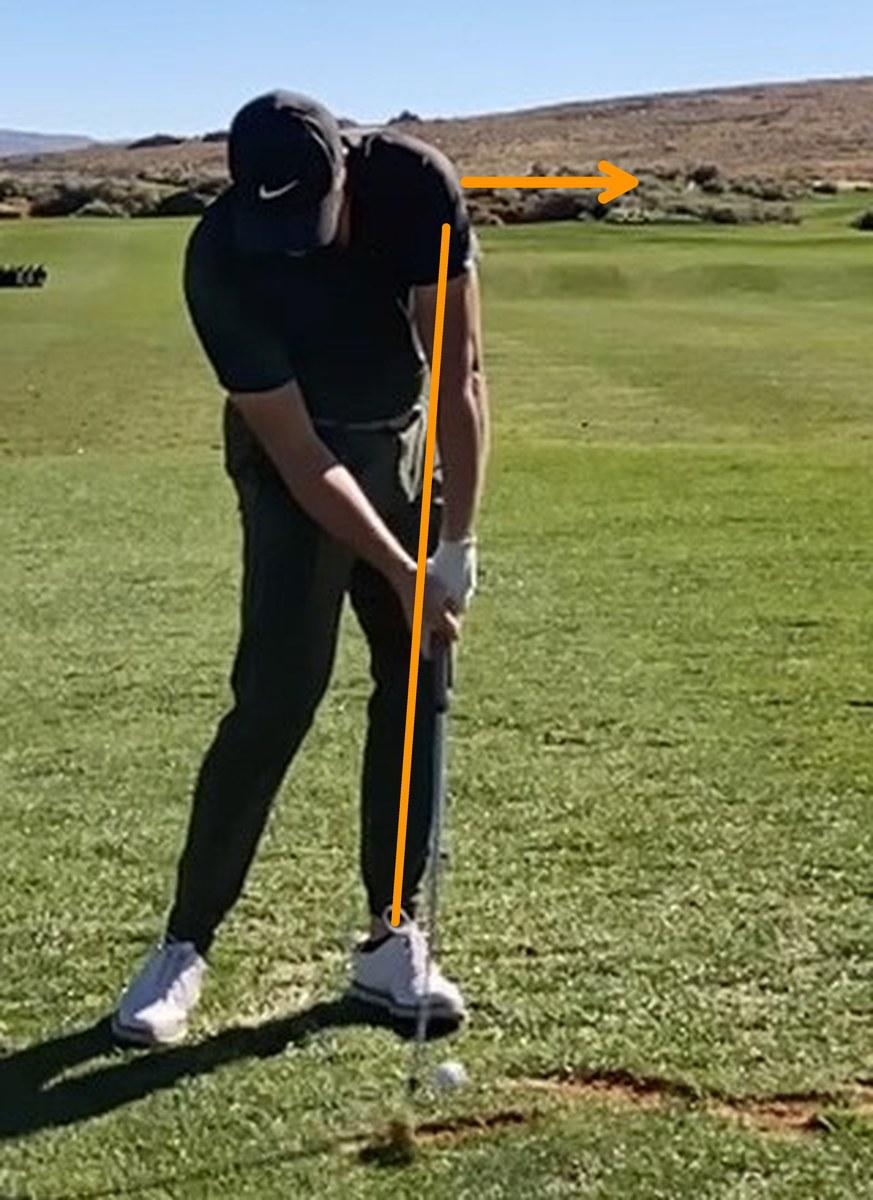
- Picture a line from your lead ankle up to your lead shoulder.
- From the top to impact, that line moves toward the target in this swing.
- A line that stays back tends to go with a less downward strike, so the club can already be rising at the ball.
A swing that does this well
Understanding the idea.
The leading edge is the bottom edge of the clubface. On a solid iron strike it reaches the ball low, near where the ball sits on the turf, while the club is still moving down. On a thin strike it meets the ball higher up. The ball comes off low and fast, often runs past the target, and stings your hands. A topped shot is the extreme version.
If you hit both thin and fat shots, they're related. If the low point comes behind the ball, the club can either hit the ground first or skim off the turf and rise into the ball. That's why many golfers hit both. The face-on reference MotionEdge measures is the same as for fat shots. The line from your lead ankle up to your lead shoulder, the compression line, tends to move toward the target between the top and impact. A line that stays back tends to go with a less downward strike, so the club can already be rising at the ball.
You can also hit it thin when the club comes in too high without the low point moving. For example, the body rises out of its posture, or the arms pull in and up through the strike. Those changes are easier to see down the line.
Check the ground first. No turf mark at all, or a mark behind the ball, tells you something different from a clean brush after the ball with the ball struck low on the face.
How to read this pattern.
A slightly thin iron can still fly well, and a sweeping strike that barely brushes the turf is sound with longer clubs and fairway woods. Work on it when strike after strike in a session meets the ball above its bottom. One low shot isn't a pattern.
Trying to help the ball up usually makes thin shots worse. The loft of the club gets the ball in the air. A scooping motion moves the low point back. Don't answer a thin shot by digging on purpose. Hit the ball first and brush the turf after it.
A practice cue.
Strike down through the ball to the coin in front of it.
Try the exercise.
Ball, then coin
Take a short iron to level grass. Put a coin or a flat marker on the turf about a ball's width in front of the ball, toward the target.
Start with small swings, about hip high to hip high. Hit the ball and then brush the coin or the turf under it. If the club passes over the coin, it was rising at the ball. If it hits the ground behind the ball, it bottomed out too early. Either way, you know where the low point went.
Once you brush after the ball most of the time, make the swing longer. Keep the finish balanced. If you catch yourself chopping down steeply to reach the coin, move it back closer to the ball.
What to record
After each ball, note whether the club brushed the coin and how the strike felt. Count how many of each set met the ball first and brushed after it.
Practice set: Hit 3 sets of 5 small swings, then 2 sets of 5 three-quarter swings, noting after each ball whether the club brushed the coin.
Keep in mind: Picture the club traveling down through the ball to the coin.
Review the result.
For a practice comparison, record 5 full mid-iron swings from a face-on view, keeping the club in frame. Use the same setup for both sets; label shorter drill swings separately.
Film face-on with the club in the shot. Pause at the top and at impact and compare where the line from the lead ankle to the lead shoulder sits. If you still hit it thin with a good line, add a look from down the line and compare your height at address and at impact.
You want ball-first contact, a brush mark after the ball and a solid feel. A lower or higher picture isn't the point. Judge it with the same club and target before and after practice.
Watch these clips.
These demonstrations offer another way to understand the idea. Each video opens at the selected starting point and continues playing; use the note below it to focus your viewing.
The difference between a thin shot and a topped shot, and why golfers tend to hit them. That's the strike this guide covers.
The ground-contact drill lets you see where the low point is. It's a practical way to test ball-first contact without trying to hold a wrist angle.
The iron discussion ties the strike to the club coming down into the ball and the ground contact. Keep the driver part separate, because a teed shot is a different job.
The impact explanation gives you a reference for the handle and clubhead near the strike. Judge it with the contact. Don't copy an exact amount of lean.