
Launch monitor
Attack angle.
When your club meets the ball, attack angle tells you whether it was moving down or up. TrackMan shows it in degrees, negative for down and positive for up. Strike down through an iron off the turf, and sweep a teed driver slightly up.
By Dwain Kinghorn · Updated
What to look for.
- Where it comes from
- A launch monitor (TrackMan), not the video
- Where to find it
- The Swing Scorecard's TrackMan rows, on a swing with TrackMan data attached
- Attack angle is the club moving down (negative) or up (positive) as it meets the ball.
- With irons most tour swings are a few degrees down. With the driver, they run from slightly down to a few degrees up.
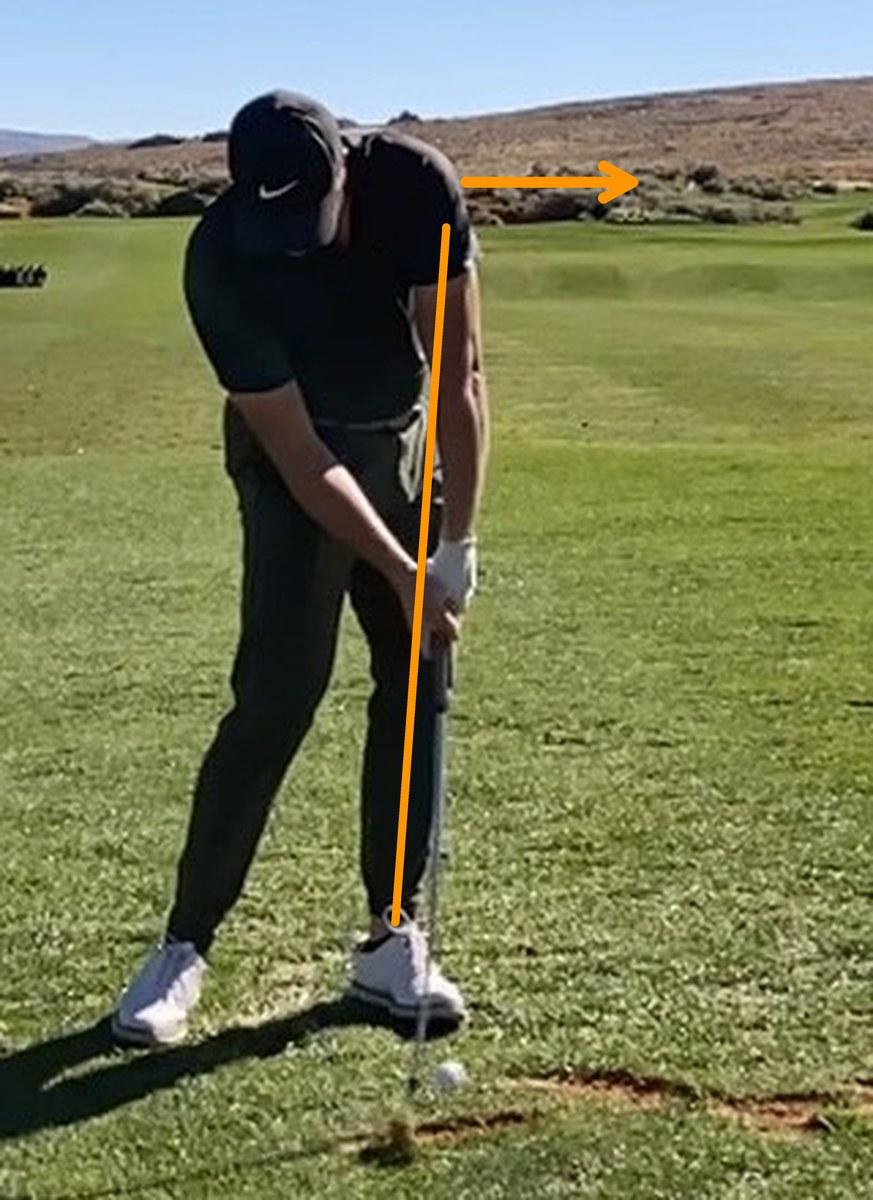
- On video, a lead side that moves less toward the target into impact tends to go with a less downward strike.
What goes with it on video
Understanding the idea.
With an iron off the ground, the club usually meets the ball while it's still moving down, so the attack angle is negative. With a teed-up driver, the club can meet the ball level or on the way up. The number reads the same way for left- and right-handed golfers.
These ranges come from TrackMan: the middle 80 percent of the tour swings MotionEdge has for that club. They show where good players land. They aren't a number to aim for. With irons, most tour swings come in between about 7 and 3 degrees down, with the middle near 5 down. With wedges, between about 8 and 4 degrees down. With the driver, between about 2 degrees down and 5 degrees up, with the middle about 2 up.
Attack angle and low point go together. A steeper downward angle usually bottoms out farther after the ball. On video, a lead side that moves less toward the target into impact tends to go with a less downward strike, the same picture the low point guide shows.
For the driver, the hitting down guide covers swings that bring an iron's downward angle to a teed ball.
How to use this idea.
Tour players cover a range with every club, and a driver that comes in slightly down can still fly well. The number is one part of how the club meets the ball. Launch, spin and the strike decide what the ball does.
A practice cue.
Let the club meet the ball on the way down with an iron, and on the way up with a teed driver.
Try the exercise.
Two-club attack check
On a launch monitor, hit five mid-irons and five drivers at your normal pace and note the attack angle of each.
For the irons, a line or towel behind the ball helps you strike down. For the driver, tee the ball so half of it sits above the top of the face, and play it a little forward in your stance. Hit five more of each and compare.
What to record
Compare the average of each set with the same club, and keep a change only when the number repeats and the strike holds up.
Practice set: Hit 2 sets of 5 with each club, noting the attack angle of every ball.
Keep in mind: Picture the iron striking down through the ball and the driver sweeping up through it.
Review the result.
Compare averages with the same club. Single shots don't tell you much. You're looking for an iron number that stays negative and a driver number that stays near level or up, with the strike holding up.
Watch these clips.
These demonstrations offer another way to understand the idea. Each video opens at the selected starting point and continues playing; use the note below it to focus your viewing.
Driver attack angle examples and how a different delivery can change distance potential.
Attack angle with irons and why a downward strike goes with solid contact from the ground.