
Down-the-line
Inside takeaway.
When your clubhead gets behind your hands early in the takeaway, the club has farther to go up and around. The rest of the swing often has to make up for it, and contact and direction get harder to repeat. Send the clubhead back over a stick on the ground before it curves in with your turn.
By Dwain Kinghorn · Updated
Down-the-line · Club in frame · Address, Takeaway, Halfway back
What to look for.
- Camera view
- Down-the-line
- Where to pause
- Takeaway, with the shaft about level going back
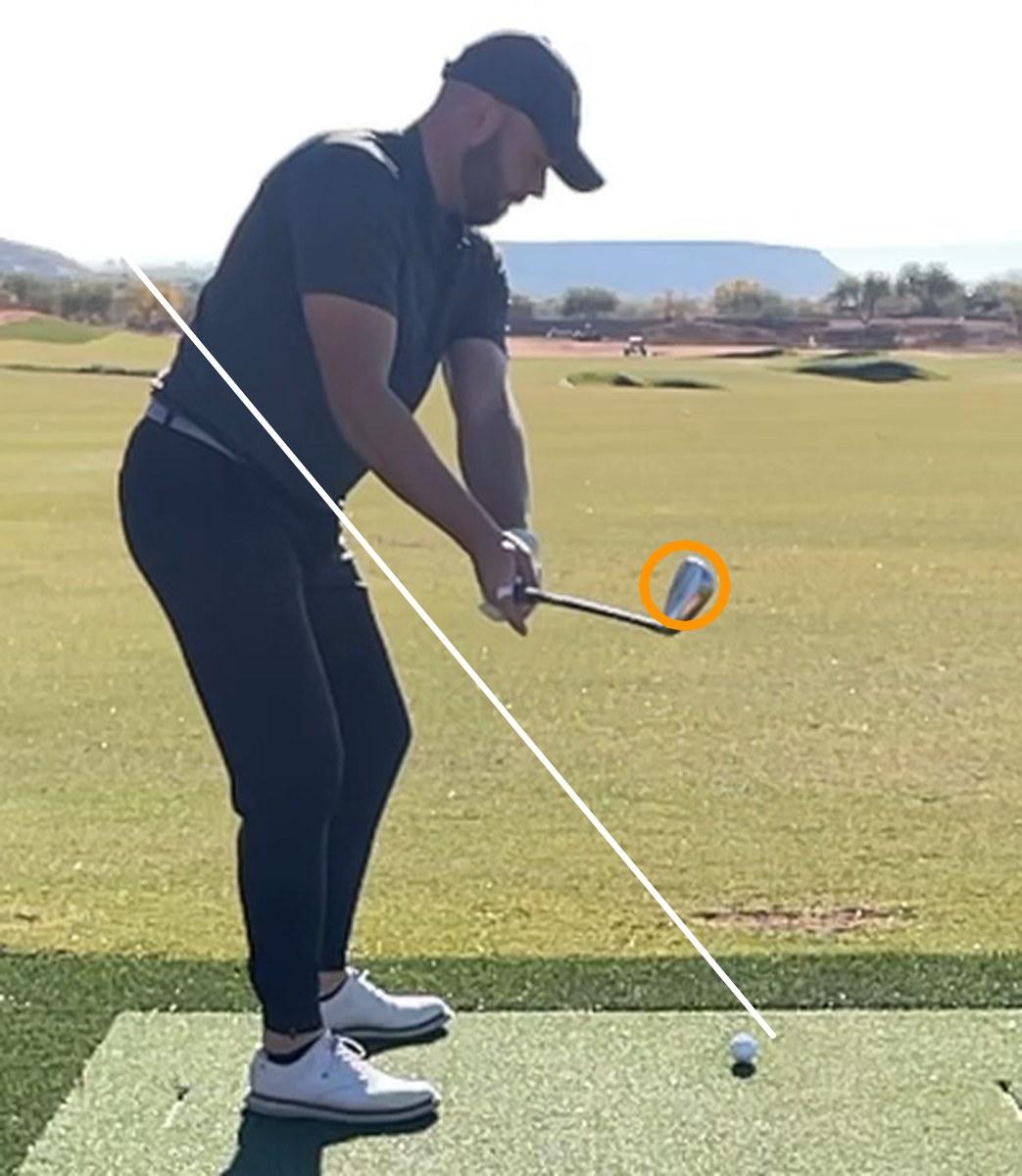
- Picture a line from the ball up through your hands at address: your address shaft line.
- In this swing the clubhead, circled, sits a little outside the hands and above that line.
- A clubhead well under the line and behind the hands this early is the inside takeaway picture.
A swing that does this well
Understanding the idea.
Down the line, the address shaft line is the line the shaft makes at address, extended back and up from the ball. Takeaway is the frame early in the backswing where the shaft is about level with the ground. At that frame, compare the clubhead with the address shaft line. Under the line is inside. Above it is outside. Tour players sit a little either side of it. MotionEdge's Swing Review flags the takeaway only when the clubhead is farther under or above the line than the tour range.
An inside takeaway usually starts with the club rolled away behind the body, or with the hands moving out toward the ball while the clubhead stays back. Many coaches describe the tour picture at shaft parallel as the clubhead about in line with the hands or slightly outside them. When the clubhead is already well behind the hands, the club has farther to go up and around. The rest of the backswing often has to make up for it.
A related check reads the clubhead earlier, from Address until the clubhead rises above the hands. Plenty of good players take the club a little inside, so that check flags only a clubhead that moves under the line farther than the tour range.
A club that starts well inside can be followed by different fixes. The arms lift steeply to find the top, the body stands up going back, or the first move down sends the hands out toward the ball. Coaches have linked a quick inside start to lifting and to an over-the-top move coming down. These can go together but don't always, so follow the whole backswing before you decide the start is the cause.
Film from behind the hands, looking along the target line, at about hand height, with the whole club in the shot. Film from the same spot each session.
A separate check on that same Takeaway frame looks at whether the toe sits in front of the heel, with the face turned slightly down. That face check, and the hand feel that often goes with it, is in the Open face guide. It doesn't replace this route check.
How to read this pattern.
A takeaway is the start of an arc, so the clubhead does move inside the target line as your body turns. Sitting slightly under the address shaft line at takeaway is common among good players, and some very good players start well inside and still bring the club back reliably. A takeaway that looks different from a model isn't a problem if the backswing and downswing that follow are repeatable.
The other extreme counts too. A clubhead well above the address shaft line at takeaway, farther than the tour range, gets flagged as well. Don't fix an inside takeaway by pushing your hands out toward the ball or dragging the club straight back along the target line. Both trade one extreme for the other.
A practice cue.
Send the clubhead back over the stick on the ground.
Try the exercise.
Clubhead over the stick
Take a mid-iron. Lay an alignment stick on the ground behind the ball, pointing straight away from the target along the line through the ball. It runs under where the clubhead starts back. Take your normal address with the clubhead behind the ball.
Without a ball, make slow half-swings. Watch the clubhead go back over the stick for the first part of the swing, then let it curve inside and rise as the turn goes on. Stop where the shaft is level with the ground and look. In many good swings the clubhead is about in line with the hands or a little outside them. It isn't tucked well behind them. Don't try to hold it over the stick the whole way. The arc is supposed to curve.
Add a ball and hit easy half-shots, then three-quarter shots, with your attention on the clubhead going back over the stick. If the clubhead now jumps outside the hands, or your arms reach away from your body, you've overdone it. Go back to slower rehearsals. Keep ball position and posture the same while you work on the takeaway, so you know which change you're seeing. It's working when the clubhead passes over the stick on most rehearsals without your arms reaching.
What to record
At Takeaway on the replay, note where the clubhead sits against the address shaft line and whether the backswing reached the top without a lift. Keep the change only if contact held or improved.
Practice set: 6 slow rehearsals to shaft level, then 2 sets of 5 easy mid-irons.
Keep in mind: Let the clubhead lead the way back over the stick, then curve in with the turn.
Review the result.
For a practice comparison, record 5 full mid-iron swings from a down-the-line view, keeping the club in frame. Use the same setup for both sets; label shorter drill swings separately.
Film five full mid-iron swings down the line, from behind the hands, looking along the target line at hand height, with the whole club in the shot. In MotionEdge, step to Takeaway and compare the clubhead with the address shaft line, then step on a few frames. Look for a clubhead near the line at takeaway, not well under it, and a backswing that reaches the top without a lift or a reroute.
Then look at the strike. A takeaway that looks tidier but hurts your contact isn't progress. A clubhead now well above the address shaft line means you've gone too far. Film from the same spot each session so the comparison is fair.
Watch these clips.
These demonstrations offer another way to understand the idea. Each video opens at the selected starting point and continues playing; use the note below it to focus your viewing.
From down the line, the clubhead sits well under the address shaft line at waist height, next to a swing whose club tracks up that line. The low route is shown leading to standing up.
The takeaway exercise shows how the first part of the route shapes the rest of the backswing. Use it for a start you can manage. You don't have to keep the club on a straight line forever.
The early-movement examples make the club's first route easier to spot. Follow how it plays out before you judge the whole swing by the first move.