
Down-the-line
Flat backswing.
A flat backswing carries the arms or shaft on a relatively low plane. Learn when that shape affects delivery and why low, inside, and laid off are not interchangeable labels.
By Dwain Kinghorn · Updated
Down-the-line · Club in frame · Takeaway, Backswing, Top
Read the arms and shaft separately.
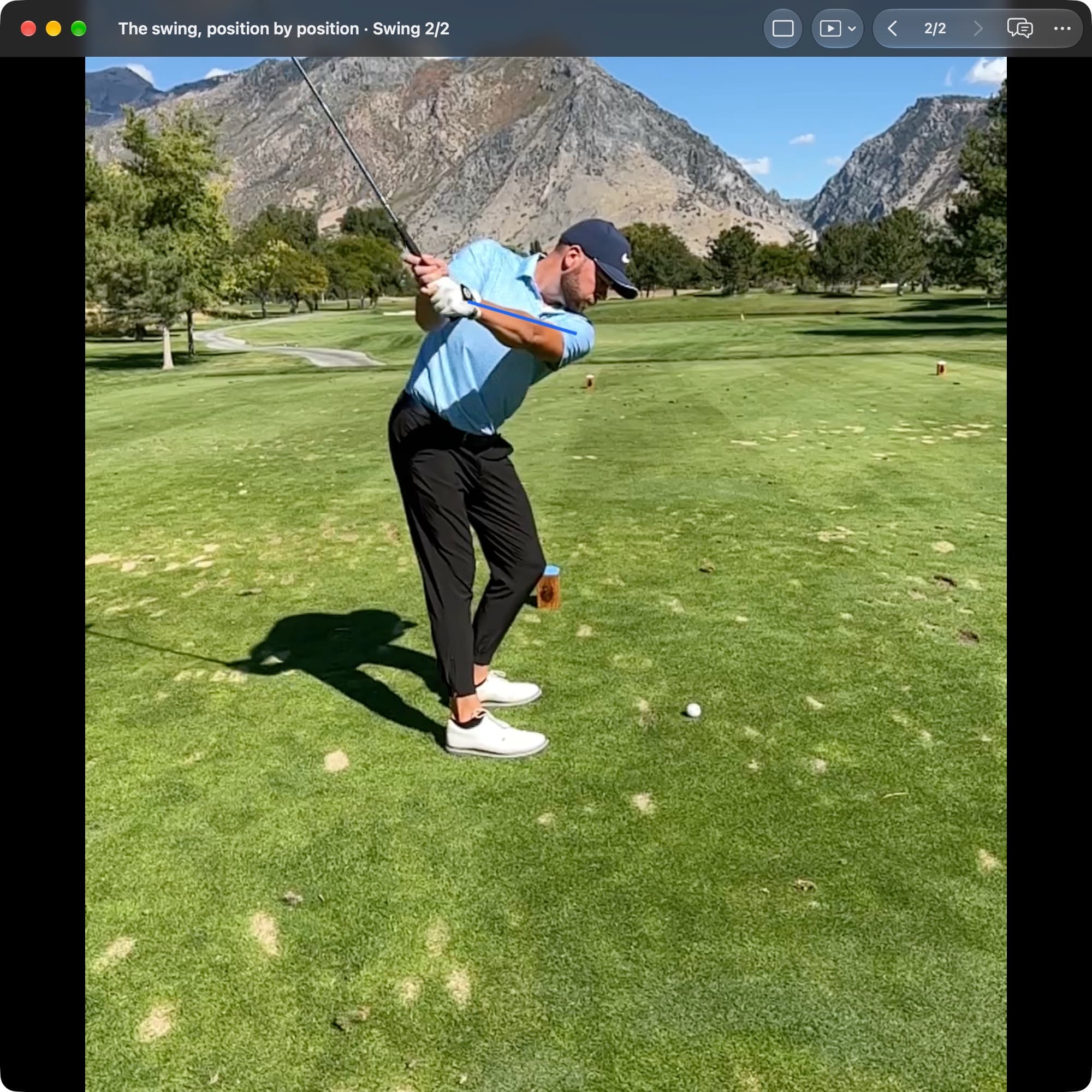
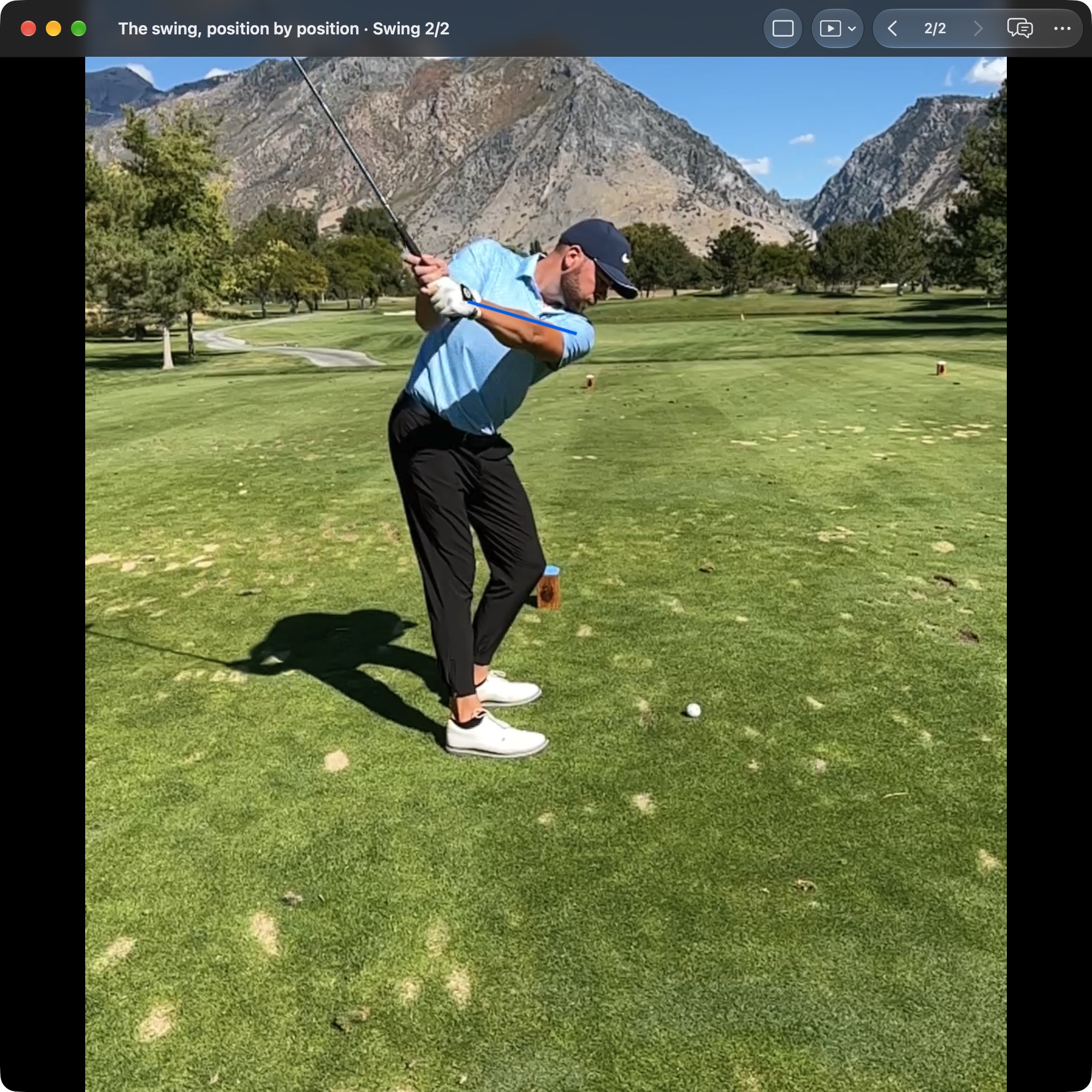
In these down-the-line views, the blue line follows the lead arm. First read the arm's height across the chest; then follow the shaft from the hands to the clubhead. Those are different references.
During the backswing
Near the top
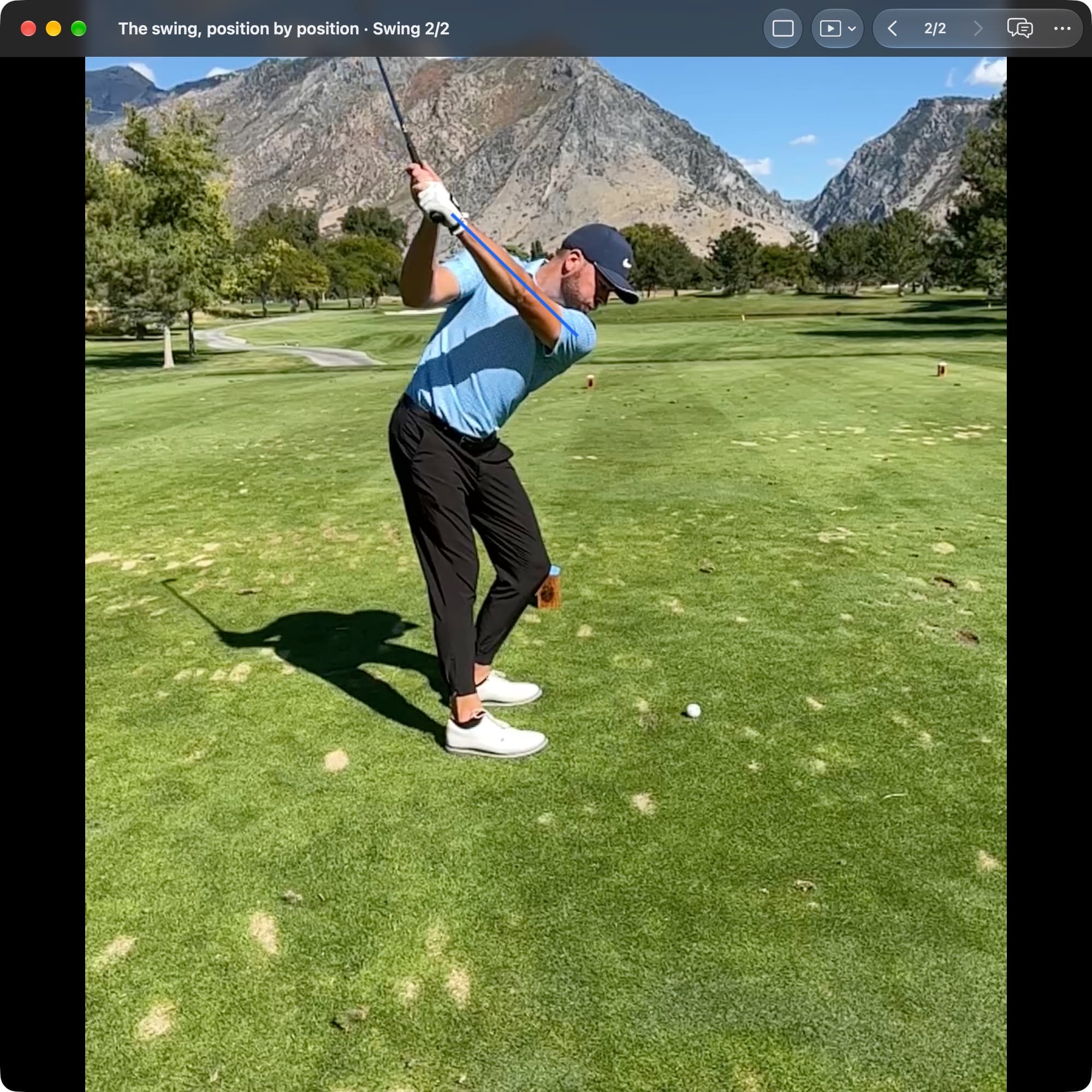
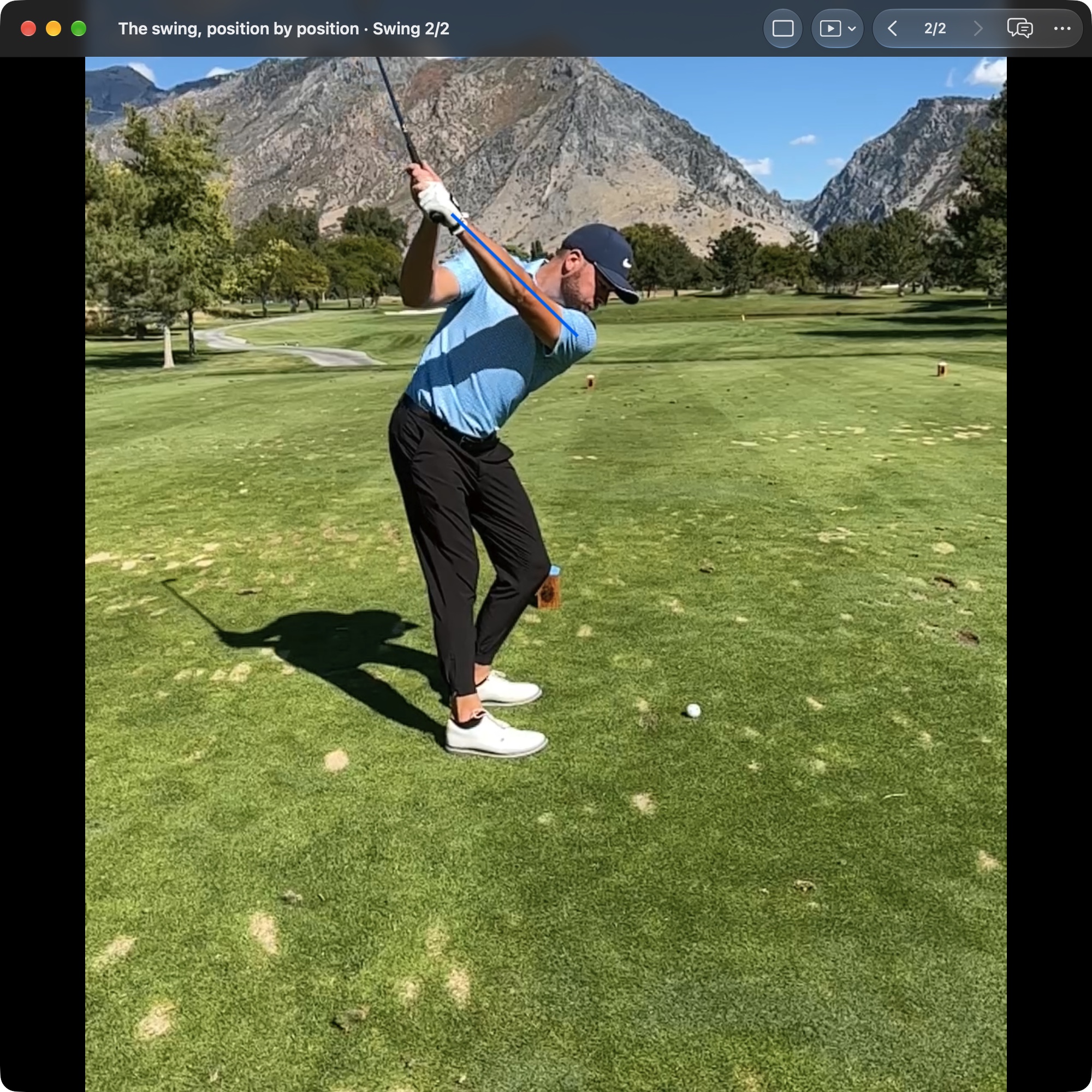
“Flat” describes inclination, “inside” describes location, and “laid off” describes shaft direction near Top. The reference sequence helps separate those ideas. Use the same camera position when examining your own swing; the photographs are not angle targets.
Try this view with your own swing
- Use a consistent down-the-line view. Open Video Player and pause with Jump to position at Backswing, then Top.
- Turn on the live arm reference. In AI Overlays, turn on the Live toggle for Lead Arm Line. Live follows the current frame; Setup is a reference from Address. Keep the other overlays quiet.
- Continue into Transition. Use the position picker and frame scrubber to follow the club’s return. Compare that route and the resulting contact before changing backswing height.
Understanding the idea.
Flat describes the inclination of a swing component relative to the ground. The arms may travel lower around the body, or the shaft may appear more horizontal at a particular point. Inside describes position relative to the target line, while laid off describes where the shaft points near the top. These observations can occur together, but they are not the same thing.
A low backswing can be functional. It becomes worth investigating when the golfer repeatedly needs a difficult reroute to reach the ball, or when the club gets trapped behind the body. A block or hook does not prove the backswing was too flat; the face, path, and strike must still be considered.
Use down-the-line video with consistent camera placement. Follow Takeaway through Top and into Transition. A shaft pointing left of the target at the top for a right-handed golfer does not, by itself, establish that the entire backswing was too flat.
How to read this pattern.
The club moves inward as it travels around the body. Trying to keep it outside the hands or directly in front of the chest throughout the backswing can create an unnatural route. Body proportions, club length, and swing style all affect the visible plane.
A practice cue.
Swing the club through a comfortable window above the trail side.
Try the exercise.
Comfortable backswing window
above the trail side
Imagine a broad opening beside and above your trail shoulder. Swing through the opening without reaching for its upper edge.
A rehearsal image, not a measured plane or a physical obstacle.
- Choose a mid-iron and begin without a ball. Imagine a broad window beside and above the trail shoulder. Make a short backswing through that space, then swing to a relaxed finish. The window is an image for the rehearsal, not an exact height to reach.
- Record a few rehearsals. If the club was wrapping low behind you, look for more room to start the return. If the window makes you lift abruptly or throw the club down steeply, lower the imagined opening and shorten the motion.
- Add a ball and hit easy shots toward a modest target. Keep grip and target stable. Compare the backswing and delivery with the original set, using both the video route and strike quality to judge the experiment.
What to record
Compare the club’s route into the downswing and the strike across the two sets. If the new backswing creates an abrupt lift or a steeper return, make the task smaller.
Practice set: Make 5 window rehearsals, then hit 2 sets of 5 easy mid-irons before trying a longer backswing.
Keep in mind: Let the club rise through the window without reaching for its top edge.
Review the result.
For a practice comparison, record 5 full mid-iron swings from a down-the-line view, keeping the club in frame. Use the same setup for both sets; label shorter drill swings separately.
Compare the backswing and transition together in a down-the-line view. Look for a route that makes the return easier and contact more predictable. Do not judge success by whether the shaft points exactly at the target at the top.
Watch these clips.
These demonstrations offer another way to understand the idea. Each video opens at the selected starting point and continues playing; use the note below it to focus your viewing.
The steep-versus-shallow discussion helps distinguish shaft inclination from other position labels. Follow the full route rather than treating laid off and flat as synonyms.
The takeaway exercise illustrates how the early route influences the rest of the backswing. A manageable start is the focus, not keeping the club on a straight line indefinitely.