
Face-on
Shift pattern.
Seen face-on, your body moves sideways through the swing as well as turning. Most good swings turn back without sliding, then move toward the target by halfway down. Turn back, then let your body move toward the target as the club starts down.
By Dwain Kinghorn · Updated
Face-on · Top, Halfway down, Impact
What to look for.
- Camera view
- Face-on
- Where to pause
- Impact, compared with the top
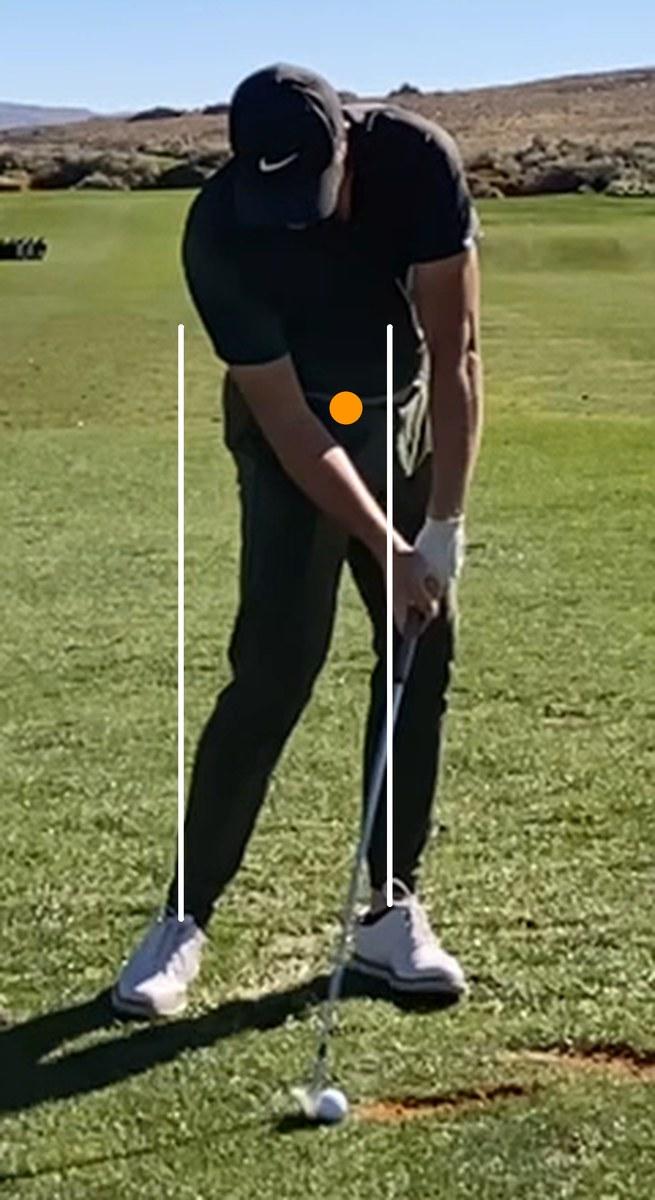
- Picture lines straight up from both ankles.
- In this swing, at impact, the middle of the hips, the dot, has moved well toward the lead-side line without passing it.
- Hips that stay back near the trail line, or slide past the lead foot, are what the scorecard flags.
A swing that does this well
Understanding the idea.
In most tour players' swings the body turns going back without the trail hip sliding past its line. After the top, the body starts moving toward the target by halfway down and is well toward it at impact. The lead hip doesn't slide on past the lead foot.
The scorecard reads that pattern from several measurements and flags it outside the tour range on either side. That means a sway away from the target going back, a shift that starts late or never gets there, or a slide that carries the hips past the lead foot. The sway, hanging back and early hip slide guides each cover one part.
Read the pattern across the whole swing, from the top to impact.
How to read this pattern.
Some sideways movement is part of a good swing. How much, and when, varies from player to player, and a driver moves differently from a wedge. Within the tour range, leave it alone.
A practice cue.
Turn back, then let the body move toward the target as the club starts down.
Try the exercise.
Two-stick shift check
Push two alignment sticks into the ground just outside each foot, standing up, or stand two clubs upright against a bag on each side. Take your address with a mid-iron.
Make slow swings. Going back, the trail hip shouldn't touch the trail-side stick. Coming down, your body moves toward the lead-side stick without the lead hip pushing past it. Once the movement feels easy, add a ball at half speed. You have it when both sticks stay untouched through a set of easy swings.
What to record
Compare the same frames on a set of ordinary swings before and after practice, and keep a change only when the strike holds up.
Practice set: Make 2 sets of 5 slow rehearsals, then hit 2 sets of 5 easy mid-irons.
Keep in mind: Feel the body turn back, then move toward the target as it turns through.
Review the result.
For a practice comparison, record 5 full mid-iron swings from a face-on view. Use the same setup for both sets; label shorter drill swings separately.
To check it on your own video, film face-on, square to the target line, with both feet in the shot. At address, picture lines straight up from both ankles. Step to the top and note where the middle of the hips sits between them. Then do the same halfway down and at impact. When a swing does this well, the hips stay inside the trail-side line at the top and have started toward the target by halfway down. At impact they are well toward the lead-side line without passing it. Hips outside the trail line at the top, or past the lead line at impact, are what the scorecard flags.
Film face-on and follow the middle of the hips at the top, halfway down and impact, against lines straight up from both ankles. You're looking for a turn going back and a shift that arrives by impact without passing the lead foot.
Watch these clips.
These demonstrations offer another way to understand the idea. Each video opens at the selected starting point and continues playing; use the note below it to focus your viewing.
The two extremes, sliding and hanging back, and why some movement toward the target is needed.
Staying centred and shifting, and how the two can work together.
A shift that blends into the turn, next to plain sideways travel.