
Down-the-line
Head movement.
When you watch your head from address to impact, seen down the line, it always moves some. A head that moves a lot often goes with a change in your forward bend or your distance from the ball. MotionEdge shows it beside the forward-bend check and never calls it good or bad.
By Dwain Kinghorn · Updated
Down-the-line · Address, Top, Impact
What to look for.
- Camera view
- Down-the-line
- Where to pause
- Impact, compared with address
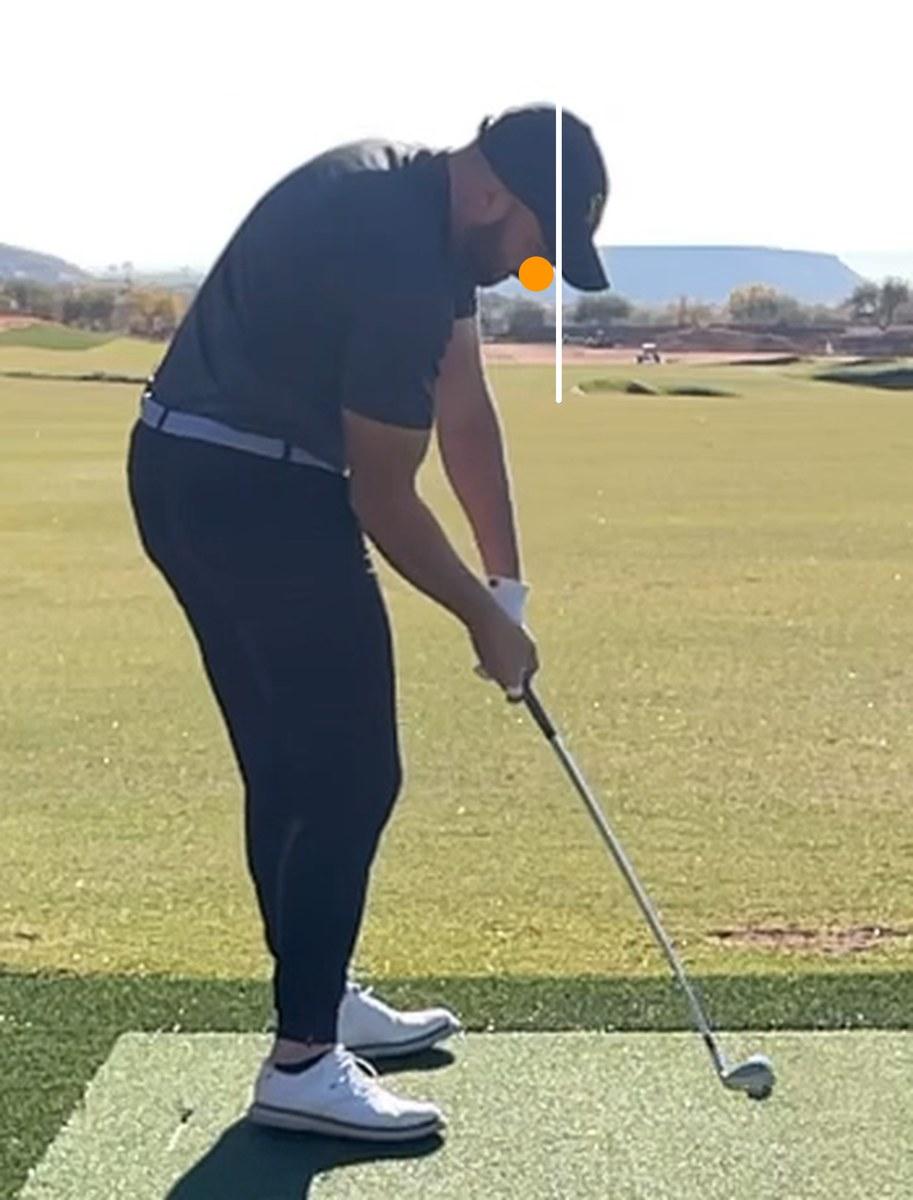
- Picture a line straight up and down through your head at address.
- In this swing, at impact, the head has moved only a little back from that line.
- Moving less than most tour players isn't a fault. This is shown, not graded.
A swing that does this well
Understanding the idea.
The head moves in every swing. It turns with the body, drops a little, and moves away from or toward the ball. The scorecard follows the head from address through impact and compares it with how far tour players' heads move at each position.
Moving less than most tour players isn't a fault. A head that moves much more than theirs is worth a look. Something else often changes with it, such as the forward bend or your distance from the ball. That's why it sits beside the forward-bend check. It gives that check context. It isn't a separate verdict.
Follow the whole path. A head that drifts and comes back can get to impact close to where it started.
How to read this pattern.
If you try to keep your head perfectly still, the turn often gets stiff. Good players let it move with the body. Some move it well away from the target going back and still strike the ball well.
If the forward bend holds and you strike it solidly, head movement within or under the tour range needs no work.
A practice cue.
Let the head move with the turn and keep your eyes on the ball.
Try the exercise.
Head-reference check
Set up a mid-iron shot with a camera down the line. Before you swing, note where your head sits against something fixed in the background, such as a post or a tree.
Hit five shots at your normal pace. Look at each one at address and at impact and note how far your head moved against that mark. Then hit five more, letting your head move freely with the turn, and compare.
What to record
Compare the same frames on a set of ordinary swings before and after practice, and keep a change only when the strike holds up.
Practice set: Hit 2 sets of 5 mid-irons, noting the head at address and impact on each.
Keep in mind: Let the head ride along with the turn.
Review the result.
For a practice comparison, record 5 full mid-iron swings from a down-the-line view. Use the same setup for both sets; label shorter drill swings separately.
To check it on your own video, film down the line with the camera fixed and your whole body in the shot. Pick a fixed point in the background beside your head at address, such as a post, a tree or a line on the wall. Step to the top, then to impact, and note where your head sits against that point each time. In a swing that does this well, the head turns and may move a little back or down, then gets back near where it started by impact. A head that moves well toward the ball, or rises a long way, usually goes with a change in the forward bend. Read the forward-bend check on the same swing.
Compare the head's path with the forward-bend check on the same swings. A head that moves while the forward bend holds is usually fine. If both change together, look at the posture guides.
Watch these clips.
These demonstrations offer another way to understand the idea. Each video opens at the selected starting point and continues playing; use the note below it to focus your viewing.
How the head tends to move in a good swing, and why a still head isn't the goal.
Why the head moves in transition as the body turns, instead of staying fixed.