
Down-the-line
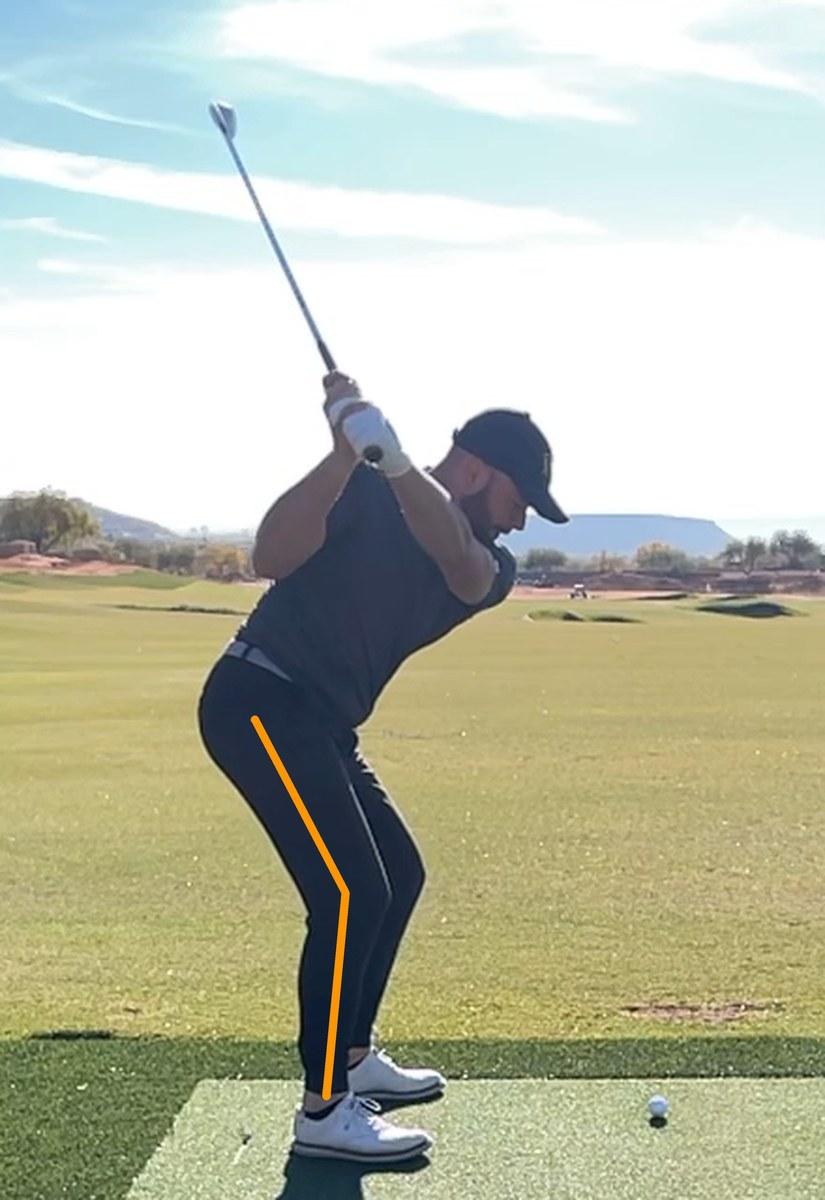
Trail knee starting down.
When you start down, watch your trail knee: most tour players let it bend a little more as the body settles. A knee that straightens from the top can lift you before the club has come down. Feel the ground under your trail foot as the club changes direction.
By Dwain Kinghorn · Updated
Down-the-line · Top, Transition, Halfway down
What to look for.
- Camera view
- Down-the-line
- Where to pause
- Transition, the first move down
- Follow the trail leg from the hip through the knee to the ankle.
- In this swing the trail knee keeps its flex as the club starts down.
- A knee that straightens from the top is the opposite of what most tour players do.
A swing that does this well
Understanding the idea.
Seen down the line, the trail knee is flexed at the top. As the downswing starts, most tour players let it bend a little more, so the body sinks slightly before it turns and rises through the ball. The scorecard reads that change from the top to halfway down.
A knee that bends more than most tour players' is a strength. It isn't a fault. The flag is on the other side: a trail knee that barely loads, or straightens from the top. A knee that straightens early can lift the body before the club has come down, which is the opposite of what most tour players do.
Read the knee across a few frames. One frame shows how bent it is. The next ones show which way it's going.
How to read this pattern.
How much players settle varies. Strong, mobile players often show more. Others show less and still strike the ball well. Within the tour range, a lighter load is fine.
Don't squat on purpose. A deliberate dip can drop the club behind you or make you hit it heavy. You want a knee that keeps its flex and gives a little as the club changes direction. It shouldn't collapse.
A practice cue.
Let the club start down as the body settles toward the ground.
Try the exercise.
Settle-and-turn rehearsal
Take a mid-iron and no ball. Swing to the top and pause. Start down with a small settle, as if sitting a little into the trail leg, then turn through to a full finish.
Repeat slowly, then at half speed. Add a ball once the settle feels like part of the change of direction and not a separate move. If you start hitting it heavy, the settle is too big. Make it smaller.
What to record
Compare the same frames on a set of ordinary swings before and after practice, and keep a change only when the strike holds up.
Practice set: Make 2 sets of 5 paused rehearsals, then hit 2 sets of 5 easy mid-irons.
Keep in mind: Feel the ground under the trail foot as the club changes direction.
Review the result.
For a practice comparison, record 5 full mid-iron swings from a down-the-line view. Use the same setup for both sets; label shorter drill swings separately.
To check it on your own video, film down the line with both legs in the shot. Step to the top and note the angle at the trail knee. Step forward one frame at a time through the transition to halfway down, watching the knee and not the club. In a swing that does this well, the knee keeps its flex and bends a little more in the first frames down. The trail hip sinks slightly before the turn carries it through. A knee that clearly straightens in those frames, lifting the hip, is the picture the scorecard flags. Look at three or four swings. The change is small and easy to miss in one.
Film down the line and step from the top to halfway down. Follow the line from the trail hip through the knee to the ankle and see whether the knee bends a little more or straightens. You want a knee that keeps or adds a little flex while the strike holds up.
Watch these clips.
These demonstrations offer another way to understand the idea. Each video opens at the selected starting point and continues playing; use the note below it to focus your viewing.
What the trail knee does as the downswing starts, and why what feels right can be the opposite of what good players do.
How the legs start the downswing and carry the turn through. That's the background for the trail knee's settle.